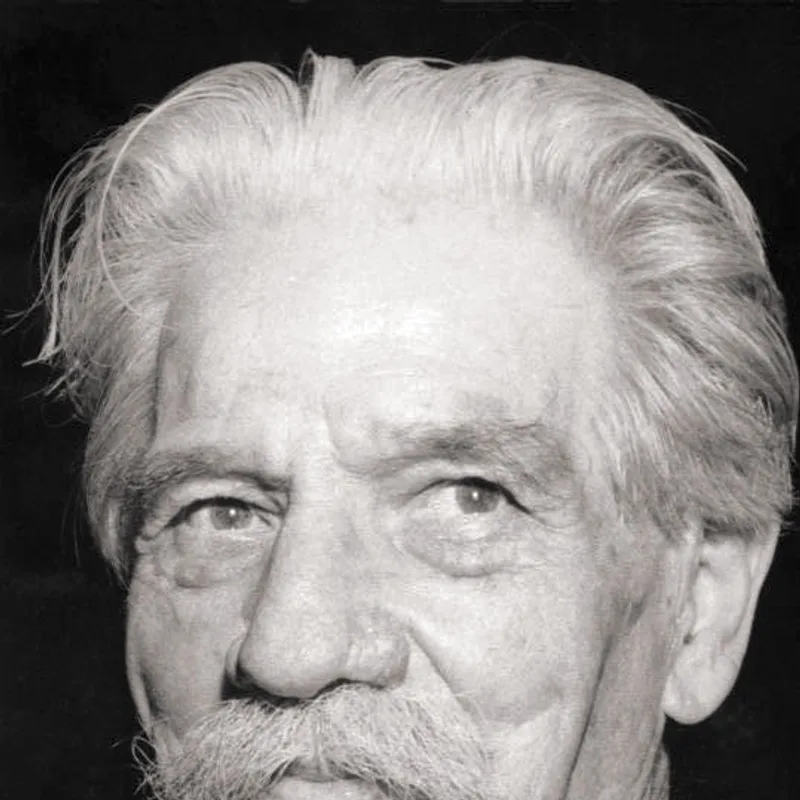
Albert Schweitzer
Physician, Theologian, Organist, 1875–1965
Ethical mystic
What is the meaning of life?
Reverence for life: devote yourself to other life.
Schweitzer was already a known theologian, Bach scholar and organist when he decided at thirty to study medicine, and in 1913 he went to Lambaréné, in what is now Gabon, to found a hospital, where he worked for most of the rest of his life. The phrase that became his ethic, reverence for life, came to him in 1915 on a river journey there. In Civilization and Ethics (1923) he set it out: each of us is a will-to-live among other wills-to-live, and the ethical answer is to protect and further life wherever we meet it. He received the Nobel Peace Prize for 1952.
-
“Affirmation of the world, which means affirmation of the will-to-live that manifests itself around me, is only possible if I devote myself to other life. From an inner necessity, I exert myself in producing values and practising ethics in the world and on the world even though I do not understand the meaning of the world.”1
-
“Reverence for life, veneratio vitæ, is the most direct and at the same time the profoundest achievement of my will-to-live.”1
What is the meaning of the universe?
A puzzling manifestation of the will to live; thought ends in mysticism.
Schweitzer's theology was liberal: The Quest of the Historical Jesus (1906) argued that Jesus expected the world to end soon and was mistaken, and he did not think that nature revealed a loving purpose. What knowledge finds in the world is only the universal will to live, often at war with itself. Yet he remained a Christian minister and called his position ethical mysticism: through reverence for life a person enters into a spiritual relation with the infinite will that is in all things.