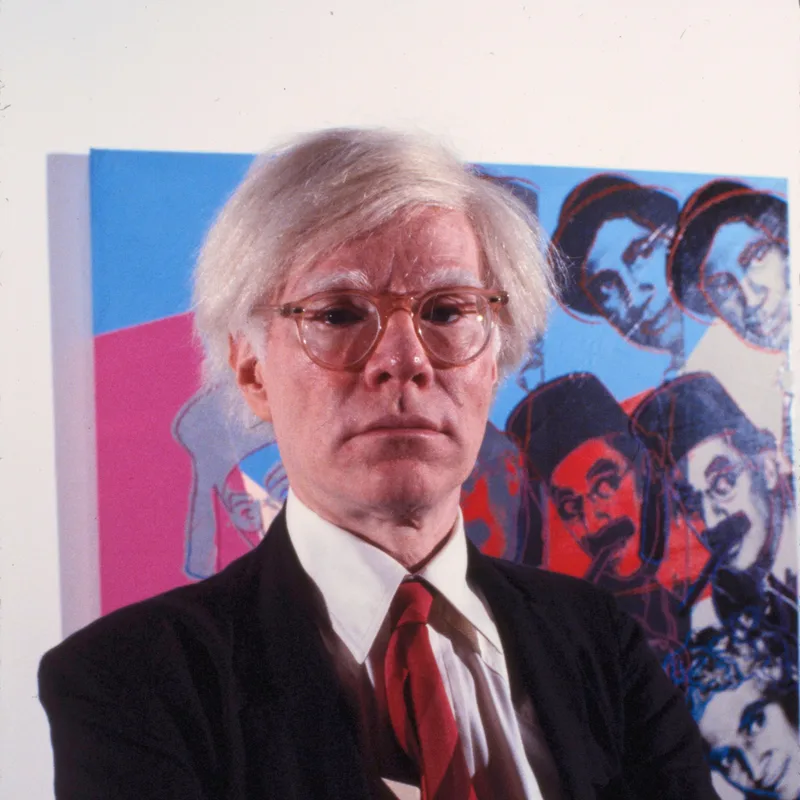
Andy Warhol
Pop artist, Filmmaker, 1928–1987
Byzantine Catholic
What is the meaning of life?
Don't make a big thing of living; the lighter things matter most.
Warhol's book The Philosophy of Andy Warhol (1975) answers the question by declining to make much of it. People make a big thing about personal love, he wrote, and the same for living, though neither has to be such a big thing. The lighter things in life, which people with heavy brains put down as merely charming, clever or pretty, are in his view the most important. For a problem that makes someone miserable for years, his remedy was to say "So what", a trick he said took him a long time to learn. Just being alive, he wrote, is work at something you don't always want to do.
-
“People make a big thing about personal love. It doesn't have to be such a big thing. The same for living—people make a big thing about that too.”1
-
“In some circles where very heavy people think they have very heavy brains, words like "charming" and "clever" and "pretty" are all put-downs; all the lighter things in life, which are the most important things, are put down.”2
-
“Sometimes people let the same problem make them miserable for years when they could just say, "So what." That's one of my favorite things to say.”3
What is the meaning of the universe?
A private Catholic faith; of death, only that you won't know it.
Warhol grew up in Pittsburgh in the Byzantine Catholic church of his immigrant parents and remained a practising Ruthenian Catholic. Those close to him regarded him as deeply religious: he volunteered at church soup kitchens and went to church two or three times a week, sitting in the back pews to avoid being recognised. In interviews he kept it light; asked in 1976 how being Catholic had helped him as an artist, he said he didn't have to go to a psychiatrist, he could go to a priest. What he wrote about death was equally deflating: in 1975 that he did not believe in it, because you are not around to know it has happened, and in 1985 that he never understood why the dead did not simply vanish, and that he would like his tombstone to say "figment". He is buried beside his parents in a Byzantine Catholic cemetery in Bethel Park, near Pittsburgh.
-
“I didn't have to go to a psychiatrist, I could go to a priest.”4
-
“I don't believe in it, because you're not around to know that it's happened. I can't say anything about it because I'm not prepared for it.”5
-
“I never understood why when you died, you didn't just vanish, and everything could just keep going on the way it was only you just wouldn't be there. I always thought I'd like my own tombstone to be blank. No epitaph and no name. Well, actually, I'd like it to say "figment."”6