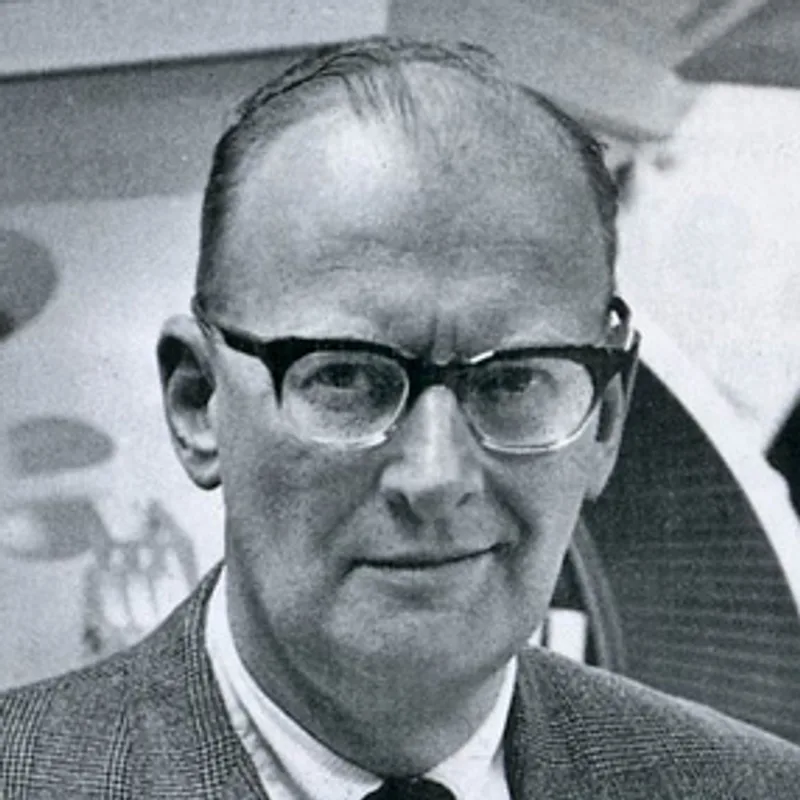
Arthur C. Clarke
Science fiction writer, Futurist, 1917–2008
Skeptic, “crypto-Buddhist”
What is the meaning of life?
Be remembered as a writer who entertained and stretched imaginations.
Clarke grew up on a farm in Somerset, served as a radar instructor in the Royal Air Force during the Second World War, and in 1945 proposed the geostationary communications satellites that now carry much of the world's television. He wrote dozens of books, including Childhood's End (1953) and 2001: A Space Odyssey (1968), developed with Stanley Kubrick, and from 1956 lived in Sri Lanka, where he also explored the reefs as a diver. Asked at ninety how he wished to be remembered, he chose, of all his careers, the writer: one who entertained readers and, he hoped, stretched their imagination.
-
“Of all these, I want to be remembered most as a writer…”1
What is the meaning of the universe?
Humanity may yet outgrow religion, its childish phase.
Clarke's fiction is full of godlike alien intelligences, and his third law holds that any sufficiently advanced technology is indistinguishable from magic. But he regarded religions themselves as a sign of humanity's childhood: so many faiths, each claiming the whole truth, could not all be taken seriously, and he hoped humankind might outgrow them, as he had imagined in Childhood's End. He called creationism blasphemy against the very God it defends, and called himself, half in jest, a crypto-Buddhist, since Buddhism, he said, is not a religion.