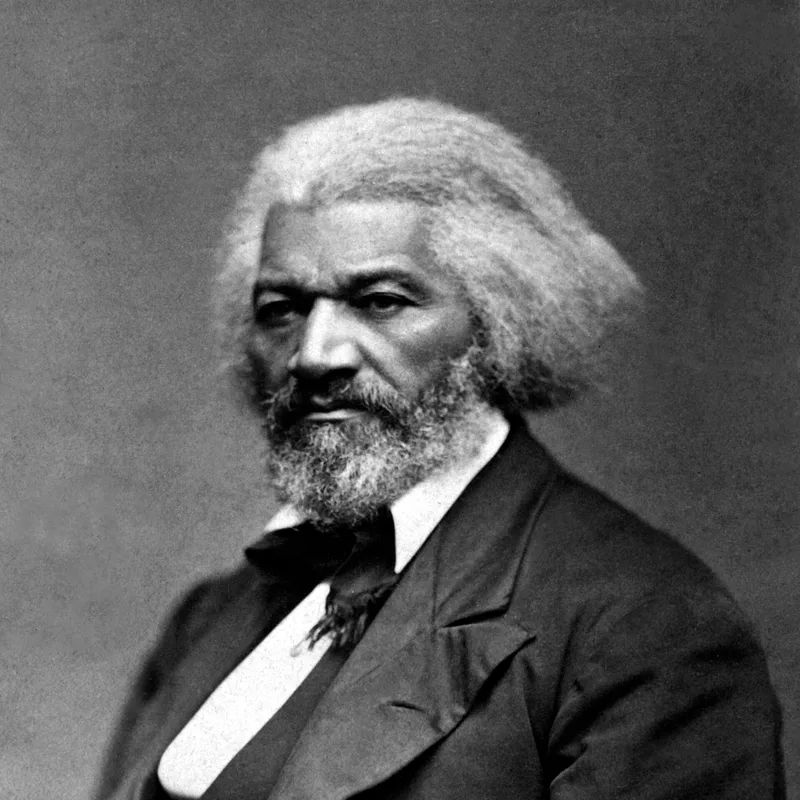
Frederick Douglass
Abolitionist, Writer, Orator, 1818–1895
Christian
What is the meaning of life?
Freedom is won by struggle; without struggle there is no progress.
Douglass was born into slavery in Maryland, taught himself to read in secret, and escaped to the North in 1838 at the age of twenty. His Narrative (1845) made him the best-known Black American of his century, and he spent his life as an orator, editor and public official working for abolition and equal rights, including votes for women. His view of life was one of effort: freedom and dignity are never handed down by the powerful but won by agitation and work. In the Narrative he describes the moment he resolved to run, whatever the cost.
What is the meaning of the universe?
The God of Christ, not the slaveholders' God.
Douglass was converted as a teenager and later licensed to preach in the African Methodist Episcopal Zion Church. He drew a sharp line between the Christianity of Christ, which he loved, and the religion of the slaveholders, which he called hypocritical; he added an appendix to his Narrative to make the distinction clear. The book also records his despair as a young slave, crying out to God and asking whether there was any God at all. In later life his religious views became more liberal, but his speeches kept the language of a just providence.