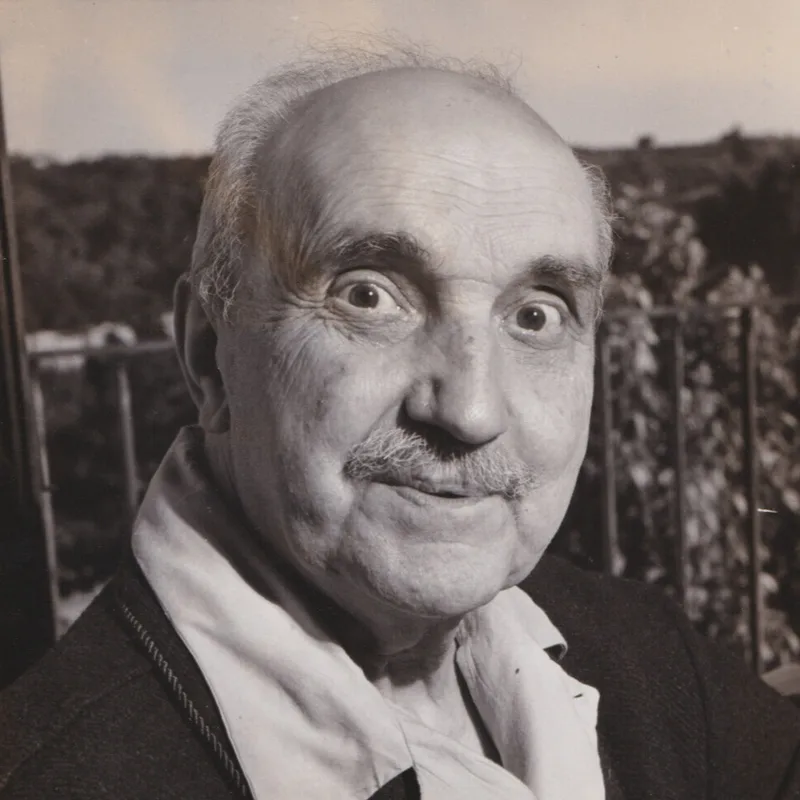
George Santayana
Philosopher, Poet, Novelist, 1863–1952
Atheist with Catholic tastes
What is the meaning of life?
No cure for birth and death but to enjoy the interval.
Santayana was born in Madrid, brought to Boston at eight, and taught philosophy at Harvard, where T. S. Eliot and Wallace Stevens were among his students, before leaving America at forty-eight to spend the rest of his life in Europe, his last years in a convent of nursing sisters in Rome. In The Life of Reason (1905–06) he described a good life as reason giving shape to our natural impulses: in society, he wrote, people find aims that could not exist in solitude, friendship, religion, science and art. His advice for the short span between birth and death was simple: since there is no cure for either, enjoy the interval.
What is the meaning of the universe?
An atheism that is true piety towards the universe.
Santayana called himself an atheist, though an unusual one: raised a Catholic, he kept a lifelong affection for the Church's art and ritual while believing none of its doctrines. Religion, in his view, is a kind of poetry that people mistake for literal truth; it expresses human ideals in imaginative form, and should be judged as one judges a lover's taste, not argued over. His atheism, he wrote, like Spinoza's, was true piety towards the universe, and denied only the gods men had made in their own image to serve their interests.
-
“My atheism, like that of Spinoza, is true piety towards the universe and denies only gods fashioned by men in their own image, to be servants of their human interests.”3
-
“Matters of religion should never be matters of controversy. We neither argue with a lover about his taste, nor condemn him, if we are just, for knowing so human a passion.”4