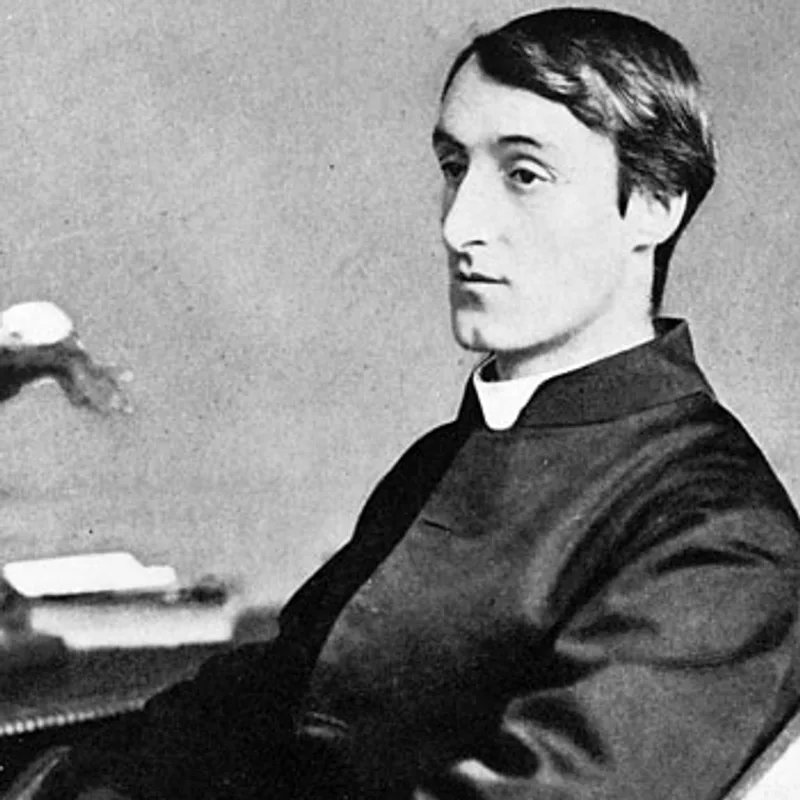
Gerard Manley Hopkins
Poet, Jesuit priest, 1844–1889
Catholic, Jesuit priest
What is the meaning of life?
Every being cries: what I do is me; for that I came.
Hopkins converted to Catholicism at Oxford under the influence of John Henry Newman, became a Jesuit, burned his early poems and wrote almost nothing for seven years. When he began again, his poems, with their compressed syntax and “sprung rhythm”, were so strange that his friend Robert Bridges published them only in 1918, nearly thirty years after Hopkins died of typhoid in Dublin. He believed that every creature has its own unique pattern, its “inscape”, and fulfils itself by being fully what it is: kingfishers catch fire, stones ring, and each mortal thing cries out “What I do is me: for that I came.” In human beings that selfhood is completed in Christ, who plays in ten thousand places.
-
“Each mortal thing does one thing and the same: / Deals out that being indoors each one dwells; / Selves — goes itself; myself it speaks and spells, / Crying What I do is me: for that I came.”1
-
“I say more: the just man justices; / Keeps grace: that keeps all his goings graces; / Acts in God's eye what in God's eye he is — / Christ — for Christ plays in ten thousand places, / Lovely in limbs, and lovely in eyes not his / To the Father through the features of men's faces.”1
What is the meaning of the universe?
The world is charged with the grandeur of God.
Hopkins's nature poems are hymns. The world is charged with the grandeur of God, which flames out like light from shaken foil; industrial England has seared and smeared the soil with trade and toil, yet nature is never spent, because the Holy Ghost broods over the bent world with warm breast and bright wings. His journals record the same close delight in particular things, clouds, bluebells, the grain of an ash tree, as a way of seeing God at work. In his last years in Dublin, exhausted and depressed, he wrote the so-called terrible sonnets of spiritual desolation, but he did not abandon his faith.
-
“The world is charged with the grandeur of God. / It will flame out, like shining from shook foil; / It gathers to a greatness, like the ooze of oil / Crushed.”2
-
“And for all this, nature is never spent; / There lives the dearest freshness deep down things; / And though the last lights off the black West went / Oh, morning, at the brown brink eastward, springs — / Because the Holy Ghost over the bent / World broods with warm breast and with ah! bright wings.”2