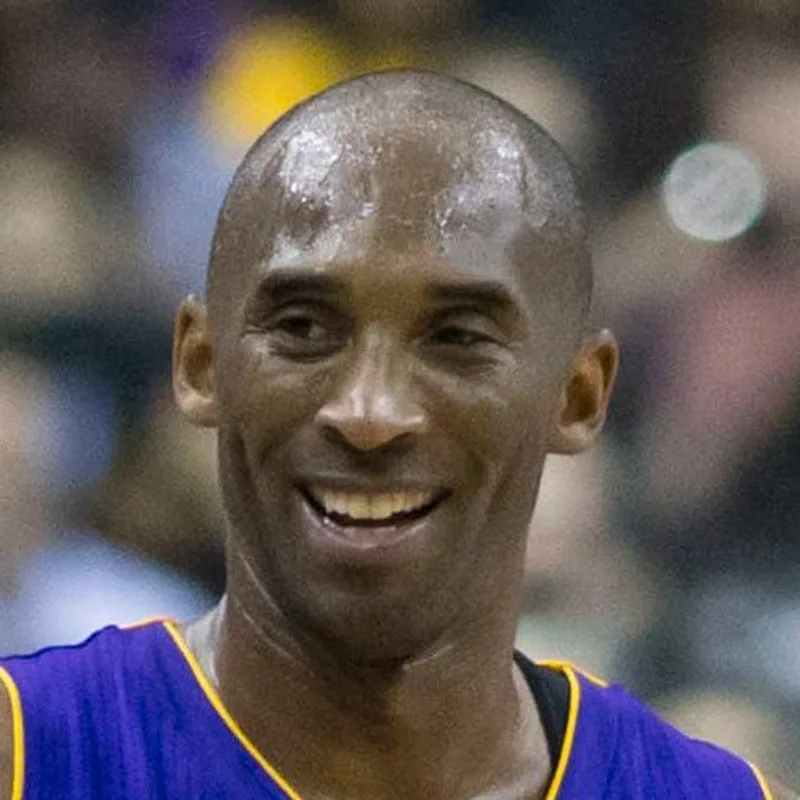
Kobe Bryant
Basketball player, 1978–2020
Catholic
What is the meaning of life?
Be who you actually are; the work itself is the dream.
Bryant's statements about life are about work and about being himself. In a 2015 interview with Chuck Klosterman for GQ, he traced a change to the 2003 sexual assault case in Colorado, whose charges were dropped a year later: at 24, he said, he began to consider the mortality of what he was doing, and decided that people would like or dislike him for who he actually was. In the same interview he counted himself among the obsessives who feel God put them on earth to do what they do, and said they have no time for great friendships: they want to work. When the Lakers retired his two numbers in December 2017, he told his daughters that the hard work itself, done on the days they didn't feel like it, was the dream: not the destination but the journey.
-
“What’s important? What’s not important? What does it mean when everybody loves you, and then everybody hates your guts for something they think you did? So that’s when I decided that—if people were going to like me or not like me—it was going to be for who I actually was.”1
-
“I’ve been fortunate to play in Los Angeles, where there are a lot of people like me. Actors. Musicians. Businessmen. Obsessives. People who feel like God put them on earth to do whatever it is that they do. Now, do we have time to build great relationships? Do we have time to build great friendships? No. … We want to work. I enjoy working.”2
-
“Those times when you get up early and you work hard, those times when you stay up late and you work hard, those times when you don't feel like working, you're too tired, you don't want to push yourself, but you do it anyway — that is actually the dream. That's the dream. It's not the destination, it's the journey.”3
What is the meaning of the universe?
Catholic faith; no life without death, and what comes after is unknown.
Bryant was raised Catholic, married in a Catholic church in 2001, and later attended Mass with his family at a parish in Newport Beach. He told GQ in 2015 that what helped him most through the Colorado case, when he was terrified of going to prison, was talking to a priest, who told him to let it go because it was in God's hands now; that, he said, was the turning point. Asked by The Ringer in 2016 about his relationship with death, he called it comfortable: there is no life without death and no light without dark, and deciding to retire had meant accepting the mortality all athletes face. Asked what he thought happens after we die, he said he did not know, and would know when he died.
-
“The one thing that really helped me during that process—I’m Catholic, I grew up Catholic, my kids are Catholic—was talking to a priest. … So then he just said, ‘Let it go. Move on. God’s not going to give you anything you can’t handle, and it’s in his hands now. This is something you can’t control. So let it go.’ And that was the turning point.”1
-
“It’s a comfortable one. It’s an understanding. You can’t have life without death. Can’t have light without the dark. So it’s an acceptance of that.”4
-
“No, I don’t know. But I’ll know when I die.”5