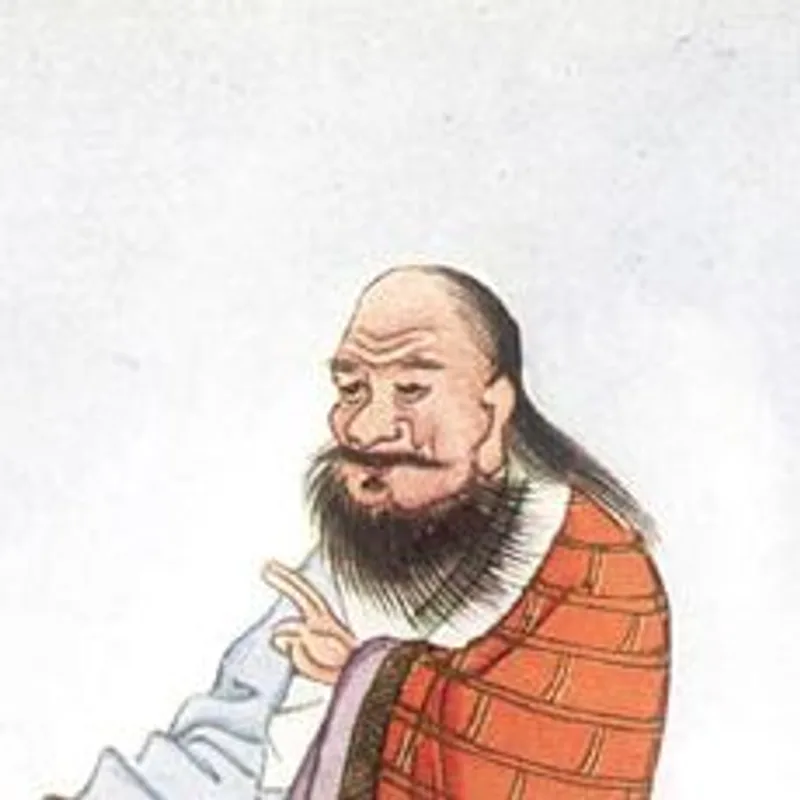
Lao Tzu
Philosopher, 6th century BC (traditional)
Taoist
What is the meaning of life?
Follow the Tao: act without striving, want little, give much.
The Tao Te Ching is a short book of 81 chapters, traditionally ascribed to Lao Tzu, an archivist at the Zhou court in the 6th century BC; most scholars now date the text to the 4th or 3rd century BC and doubt it had a single author. Its answer to how to live is to follow the Tao by not forcing things — wu wei, acting without striving, like water, which benefits everything and settles in the low places nobody wants. The good life is simple and content: knowing when you have enough is wealth, and the sage keeps little, gives much and does not contend. Knowing yourself counts for more than power over others. The book speaks to rulers as much as to individuals, and much of its advice is about governing lightly.
-
“He who knows other men is discerning; he who knows himself is intelligent. He who overcomes others is strong; he who overcomes himself is mighty. He who is satisfied with his lot is rich; he who goes on acting with energy has a (firm) will.”1
-
“There is no guilt greater than to sanction ambition; no calamity greater than to be discontented with one's lot; no fault greater than the wish to be getting. Therefore the sufficiency of contentment is an enduring and unchanging sufficiency.”2
-
“The sage does not accumulate (for himself). The more that he expends for others, the more does he possess of his own; the more that he gives to others, the more does he have himself. With all the sharpness of the Way of Heaven, it injures not; with all the doing in the way of the sage he does not strive.”3
What is the meaning of the universe?
The nameless Tao, mother of all things, older than God.
Behind heaven and earth, the text says, is the Tao, the Way: something formless and complete that existed before them, that cannot be named or put into words, and that is the mother of all things. It is not a god and has no intentions. It produces the ten thousand things and lets them go, and heaven and earth treat them without favour, like the straw dogs used in a ritual and then thrown away. Chapter 42 gives the whole cosmogony in one line: the Tao gives birth to one, one to two, two to three, three to everything. Chapter 4 adds that the Tao seems to be older than Di, the Lord on high of older Chinese religion.
-
“The Tao that can be trodden is not the enduring and unchanging Tao. The name that can be named is not the enduring and unchanging name. (Conceived of as) having no name, it is the Originator of heaven and earth; (conceived of as) having a name, it is the Mother of all things.”4
-
“There was something undefined and complete, coming into existence before Heaven and Earth. How still it was and formless, standing alone, and undergoing no change, reaching everywhere and in no danger (of being exhausted)! It may be regarded as the Mother of all things. I do not know its name, and I give it the designation of the Tao (the Way or Course).”5
-
“The Tao produced One; One produced Two; Two produced Three; Three produced All things.”6
-
“Heaven and earth do not act from (the impulse of) any wish to be benevolent; they deal with all things as the dogs of grass are dealt with.”7