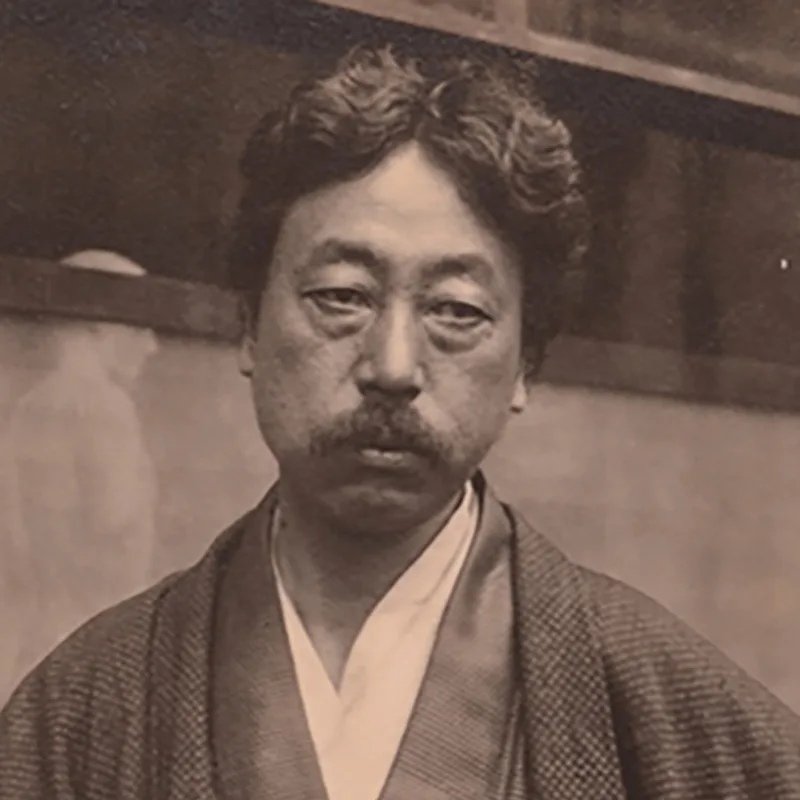
Okakura Kakuzō
Art critic, Scholar, 1863–1913
Taoist and Zen aesthete
What is the meaning of life?
Worship the Imperfect; the art of life is constant readjustment.
Okakura was a Japanese art scholar who helped save traditional Japanese art from wholesale Westernisation, led the Tokyo School of Fine Arts and later ran the Asian collection of the Museum of Fine Arts in Boston. He wrote The Book of Tea (1906) in English, for Western readers, presenting the tea ceremony as a whole philosophy of life. Teaism, he wrote, is the adoration of the beautiful among the sordid facts of everyday existence, a worship of the Imperfect, a tender attempt to accomplish something possible in this impossible thing we know as life. The art of life, he said, lies in a constant readjustment to our surroundings.
-
“Teaism is a cult founded on the adoration of the beautiful among the sordid facts of everyday existence. It inculcates purity and harmony, the mystery of mutual charity, the romanticism of the social order. It is essentially a worship of the Imperfect, as it is a tender attempt to accomplish something possible in this impossible thing we know as life.”1
-
“The art of life lies in a constant readjustment to our surroundings.”2
What is the meaning of the universe?
The Tao is the Passage, not the Path: endless cosmic change.
For Okakura, tea was Taoism and Zen in disguise. The Tao, in his reading, is not a fixed path but a passage: the spirit of cosmic change, an eternal growth that returns upon itself to produce new forms, folding and unfolding like the clouds; its absolute is the relative. Taoism accepts the world as it is and, unlike Confucianism or Buddhism, looks for beauty in our world of woe and worry. Zen adds that in the great relation of things there is no distinction of small and great, and that the trivial matters of everyday life are as important as anything else.
-
“The Tao is in the Passage rather than the Path. It is the spirit of Cosmic Change,—the eternal growth which returns upon itself to produce new forms. It recoils upon itself like the dragon, the beloved symbol of the Taoists. It folds and unfolds as do the clouds.”2