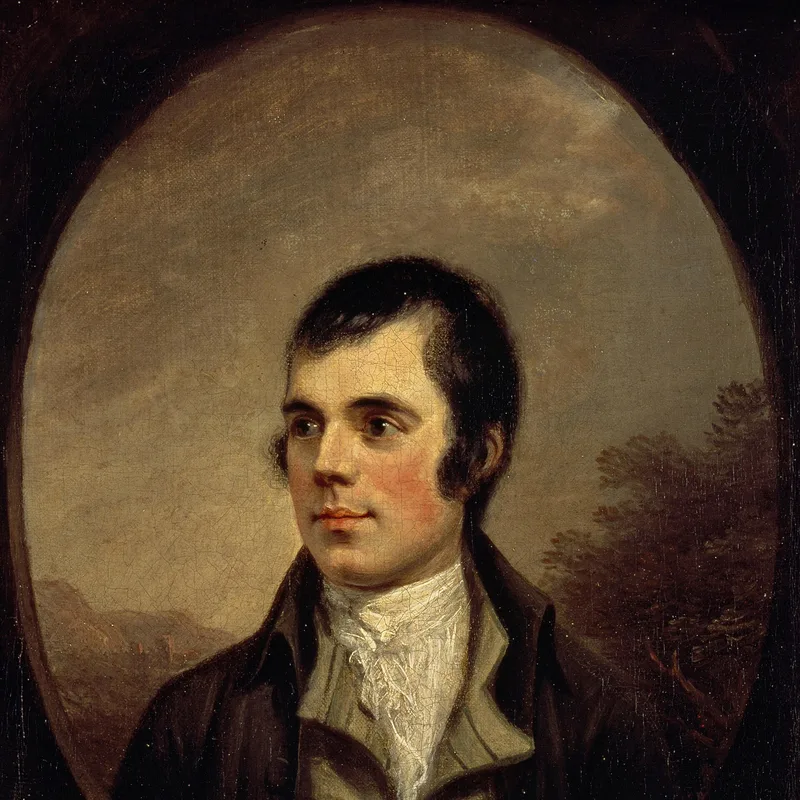
Robert Burns
Poet, Songwriter, 1759–1796
Liberal believer, anti-Calvinist
What is the meaning of life?
A happy fireside is the true pathos and sublime of life.
Burns was the son of a poor tenant farmer in Ayrshire, worked the land himself, and became Scotland's national poet with Poems, Chiefly in the Scottish Dialect (1786), writing in Scots about ploughmen, mice and lovers; he collected and rewrote hundreds of old songs, among them “Auld Lang Syne”. He died at thirty-seven, an excise officer in Dumfries. His poems prefer the plain to the grand: a happy fireside with wife and children, he wrote, is the true pathos and sublime of human life, and rank is only the stamp on the coin; the man himself is the gold.
What is the meaning of the universe?
The heart benevolent and kind most resembles God.
Burns grew up in the strict Calvinism of the Church of Scotland and spent much of his poetry mocking it: “Holy Willie's Prayer” skewers a self-righteous elder who thanks God for damning others and saving him. He was no unbeliever, though. He believed in a benevolent God and in religion as a matter of the heart, and warned a young friend that an atheist's laugh is a poor exchange for offending the Deity. The heart that is benevolent and kind, he wrote, is the one that most resembles God.