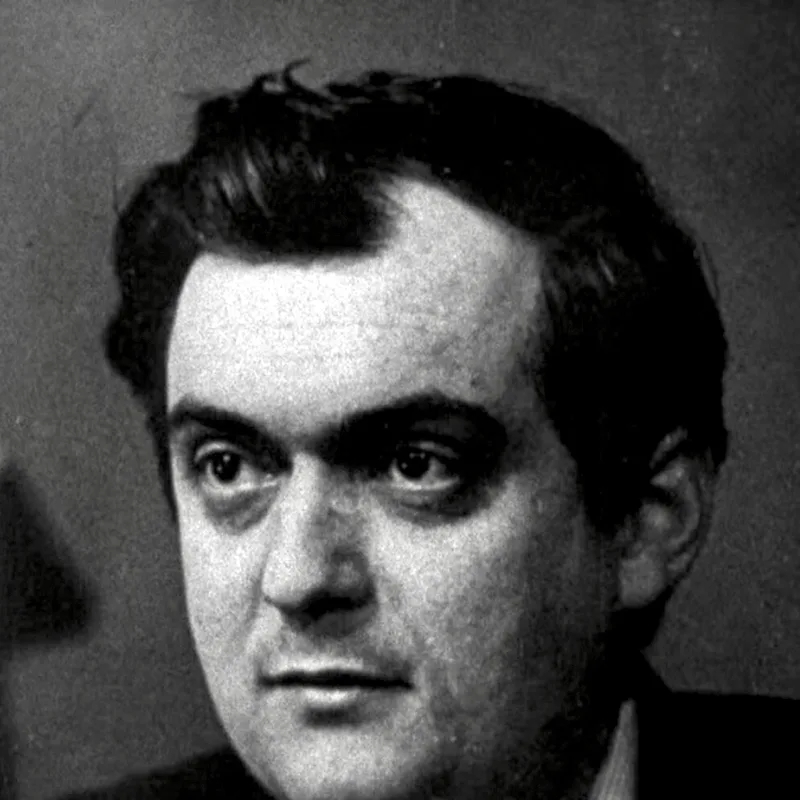
Stanley Kubrick
Film director, Screenwriter, 1928–1999
Agnostic
What is the meaning of life?
Make our own meaning; however vast the darkness, supply our own light.
Kubrick gave his fullest answer in a 1968 Playboy interview, after 2001: A Space Odyssey. Explaining why he refused to fly, he spoke of an awareness of mortality and of man's insignificance and aloneness in the cosmos, which, he said, robs life of meaning and purpose. Asked whether a purposeless life is worth living, he answered that its very meaninglessness forces man to create his own meaning: a child begins with wonder, loses it as he sees death and pain, and, if strong and lucky, can forge a fresh sense of purpose. The universe, he said, is not hostile but indifferent, and we must supply our own light.
-
“The very meaninglessness of life forces man to create his own meaning. … Both because of and in spite of his awareness of the meaninglessness of life, he can forge a fresh sense of purpose and affirmation.”1
-
“The most terrifying fact about the universe is not that it is hostile but that it is indifferent; but if we can come to terms with this indifference and accept the challenges of life within the boundaries of death — however mutable man may be able to make them — our existence as a species can have genuine meaning and fulfillment. However vast the darkness, we must supply our own light.”2
What is the meaning of the universe?
No monotheism; an indifferent cosmos, perhaps full of God-like minds.
Kubrick came from a secular Jewish family and said he had no religious upbringing; after his death his wife and daughter said he was not religious. In the 1968 Playboy interview, asked whether 2001 was a religious film, he said the God concept was at its heart, but not a traditional, anthropomorphic one: he believed in none of the monotheistic religions, but thought a scientific definition of God could be built on the likelihood of intelligences far older than ours, which would have the attributes we give to gods. He added that he did not really believe anything about such beings; speculating on their possible existence was overwhelming enough. In 1972 he told The New York Times that he would be very surprised if the universe were not full of God-like intelligence, and called this an exciting and satisfying hope. The religions, he said in 1968, had once consoled people for their mortality; with faith receding, man had no crutch left.
-
“I will say that the God concept is at the heart of 2001—but not any traditional, anthropomorphic image of God. I don't believe in any of Earth's monotheistic religions, but I do believe that one can construct an intriguing scientific definition of God …”3
-
“I'd be very surprised if the universe wasn't full of an intelligence of an order that to us would seem God-like. I find it very exciting to have a semi-logical belief that there's a great deal to the universe we don't understand, and that there is an intelligence of an incredible magnitude outside the earth. It's something I've become more and more interested in. I find it a very exciting and satisfying hope.”4
-
“The world's religions, for all their parochialism, did supply a kind of consolation for this great ache; but as clergymen now pronounce the death of God and, to quote Arnold again, 'the sea of faith' recedes around the world with a 'melancholy, long, withdrawing roar,' man has no crutch left on which to lean—and no hope, however irrational, to give purpose to his existence.”5