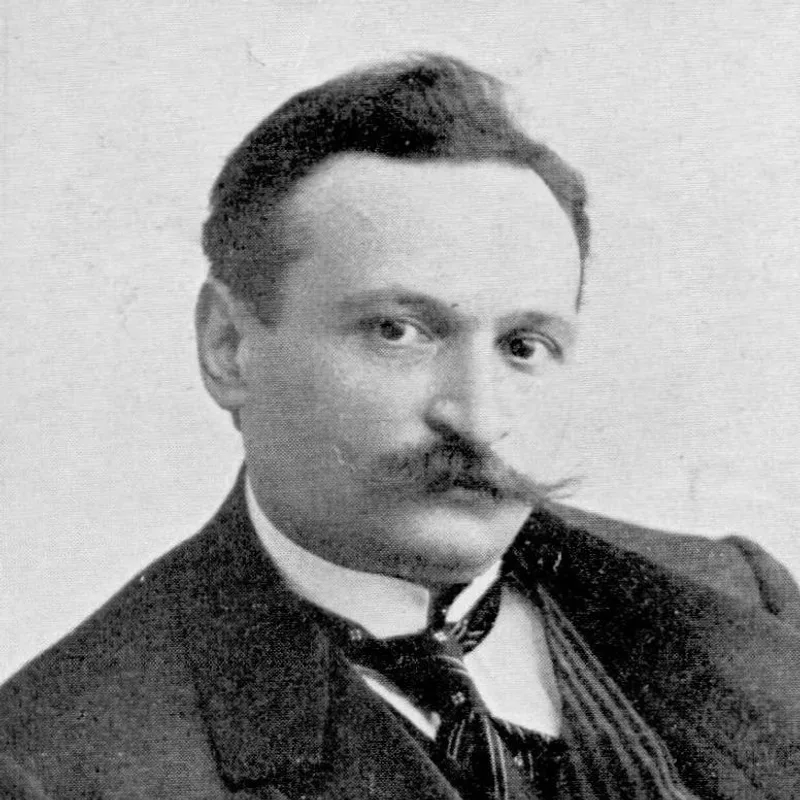
Tevfik Fikret
Poet, Teacher, 1867–1915
Deist humanist
What is the meaning of life?
The earth is my homeland, humankind my nation.
Tevfik Fikret was the leading poet of Servet-i Fünûn (“Wealth of Sciences”), the movement that modernised Ottoman poetry at the end of the nineteenth century, and a fierce critic of the despotism of Abdülhamid II; after the 1908 revolution he quickly turned against the new rulers too and attacked their greed in “Hân-ı Yağma” (“The Feast of Plunder”). He taught for many years at Robert College, briefly ran the Galatasaray lycée, and built his house, Âşiyân, on the Bosphorus to his own design. In “Halûk's Credo” (1911), written for his son Halûk, then studying engineering in Scotland, he set out a humanist faith: the earth is his homeland and humankind his nation. That all human beings are brothers may be a dream, he admits; so be it, he believed in that dream with a thousand lives.
What is the meaning of the universe?
A universal power, exalted and pure; no devil, no angel.
Fikret was brought up a Muslim, but he came to reject religious dogma and the clergy who, as he saw it, used faith to keep people ignorant and obedient; his long poem “Târîh-i Kadîm” (“Ancient History”, 1905) is an indictment of tyranny and religious hypocrisy through the ages. What he kept was a creed without revelation. Halûk's Credo begins by affirming a universal power, exalted and transcendent, holy and sublime, in which he believed with his conscience; then it does away with devils and angels altogether. We ourselves are the devil and the jinn, the poem says, and it is human beings who will turn the world into paradise.