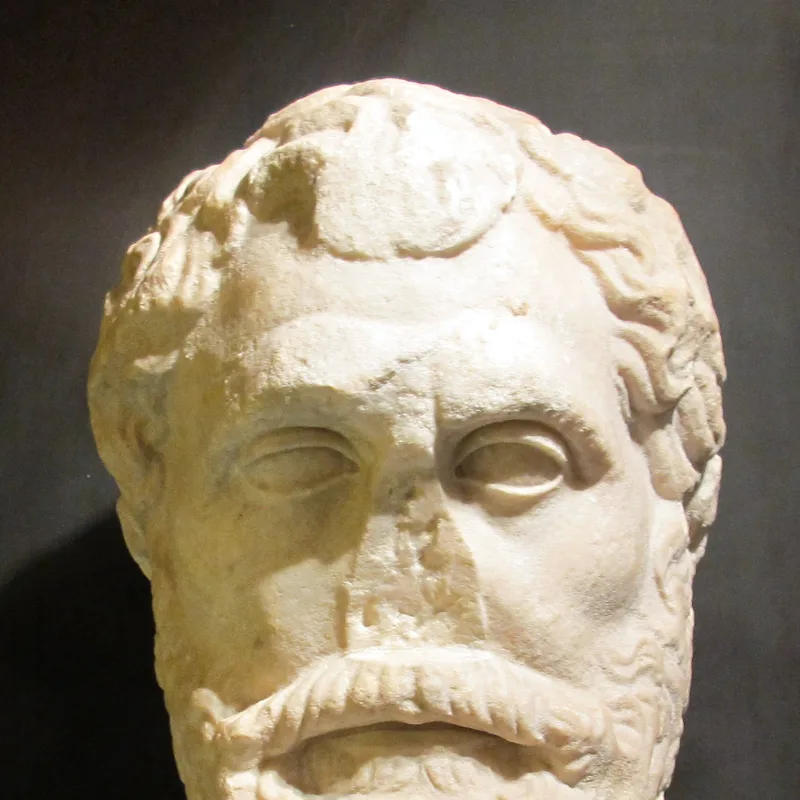
Thales of Miletus
Philosopher, Astronomer, c. 624 – c. 546 BC
All things full of gods
What is the meaning of life?
Be sound in body, resourceful in mind, and teachable.
Thales of Miletus is counted as the first Greek philosopher. He is said to have predicted the solar eclipse of 585 BC and to have explained the world by natural causes rather than by myths, and later Greeks listed him among the Seven Sages. He left no writings, so his sayings come down through collectors such as Diogenes Laërtius. Asked who is happy, he named the person with a healthy body, a resourceful mind and a teachable nature; he also taught that there is no difference between life and death, and when asked why, then, he did not die, he answered: because there is no difference.
What is the meaning of the universe?
All things are full of gods; the universe is God's workmanship.
Thales proposed that water is the origin of all things, the first known attempt in Greek thought to find one principle behind the whole of nature. Aristotle reports that he believed the magnet has a soul because it moves iron, and that all things are full of gods: matter itself is alive throughout. In the sayings handed down under his name, God is the most ancient of all things because he was never created, and the universe is the most beautiful, because it is God's workmanship.