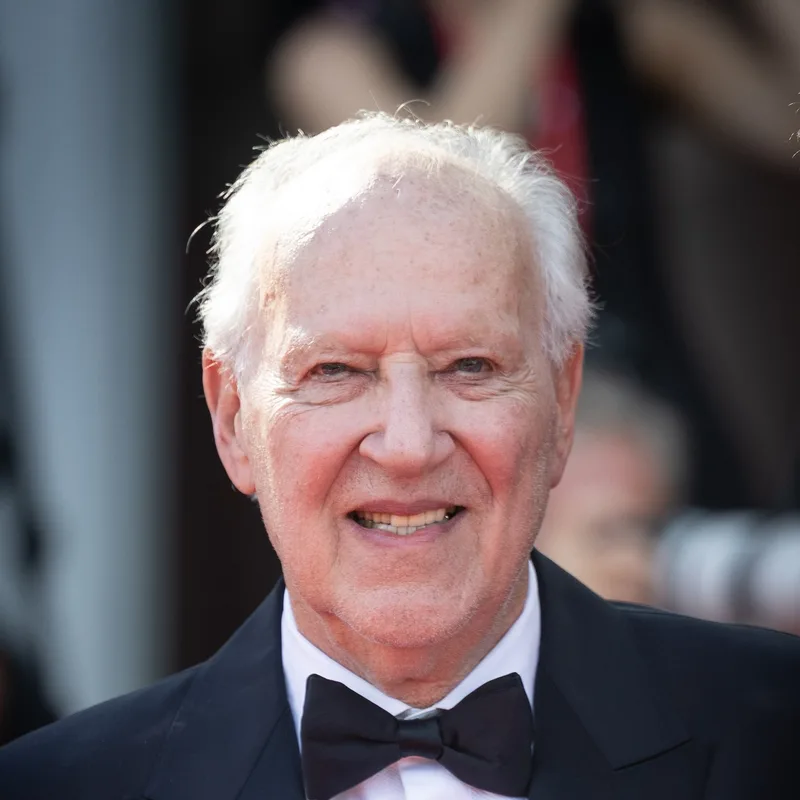
Werner Herzog
Filmmaker, Writer, born 1942
Agnostic, after a Catholic youth
What is the meaning of life?
Without dreams, life is not worth living.
Herzog grew up in a remote Bavarian mountain village after the war, taught himself filmmaking from a few encyclopedia pages, and has made more than sixty features and documentaries, often in extreme places, from the Amazon to Antarctica. To make Fitzcarraldo (1982) he had a 320-ton steamship hauled over a jungle hill; when the production seemed doomed he said that if he abandoned it he would be a man without dreams, and he did not want to live like that. Happiness, he has said, was never a goal of his; he does not think in those terms. What drives him instead is a hunger for new images, which he believes our civilization badly lacks.
-
“If I abandon this project I would be a man without dreams…”1
What is the meaning of the universe?
Not harmony but chaos, hostility and murder; the universe knows no smile.
Herzog went through an intense Catholic phase as a teenager that lasted only a few years, though he says it left a religious echo in his work; in the Amazon he called the jungle a land that God, if he exists, created in anger. In Grizzly Man (2005), about a man who lived among wild bears until one killed him, he set his own view against the dead man's sentimental picture of nature: in the bears' faces he saw no kinship and no mercy, only the overwhelming indifference of nature. The common denominator of the universe, he said, is not harmony but chaos, hostility and murder. In his Minnesota Declaration on truth in film (1999) he wrote that we should be grateful the universe knows no smile.