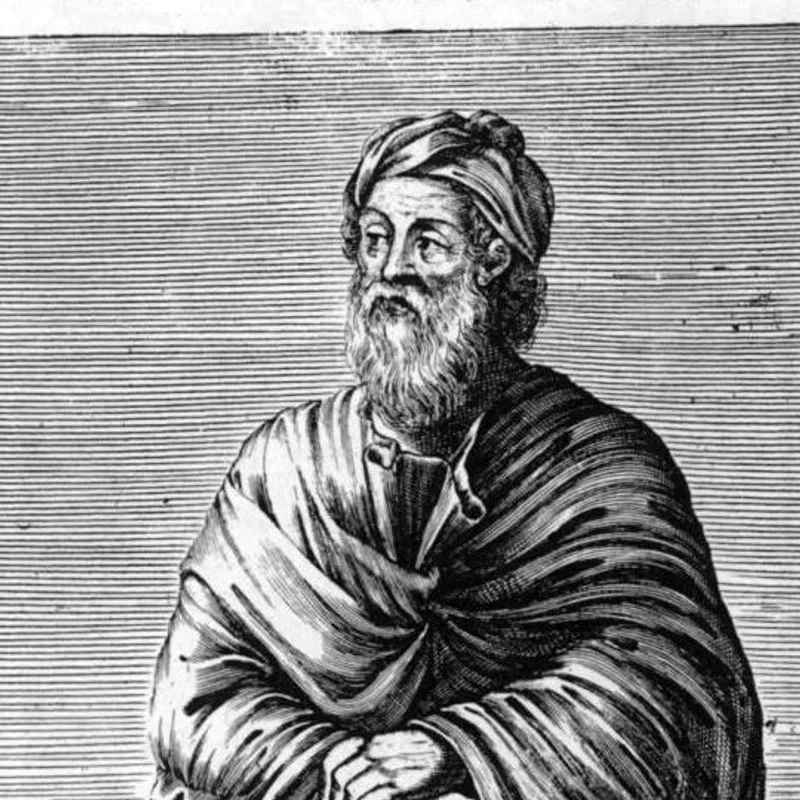
Xenophanes
Philosopher, Poet, c. 570 – c. 478 BC
One god, unlike any mortal
What is the meaning of life?
The gods revealed nothing at first; by searching we find better.
Xenophanes left Colophon in Ionia as a young man and spent more than sixty years wandering the Greek world as a poet, reciting his own verses. He mocked the honours heaped on victorious athletes, arguing that wisdom does more good for a city than the strength of men or horses. His view of human knowledge is modest and hopeful at once: no one has certain knowledge of the gods, and the gods did not show mortals everything from the beginning, but by searching, in time, people find out what is better.
What is the meaning of the universe?
We make gods in our image; the one God is all mind.
Xenophanes was the first Greek to attack the gods of Homer and Hesiod as projections of human beings: Ethiopians make their gods dark and snub-nosed, Thracians make theirs blue-eyed and red-haired, and if cattle and lions could paint, they would paint gods like cattle and lions. In their place he set a single god, greatest among gods and men, unlike mortals in body or in thought. In later accounts this god is spherical, all eye and all ear, the whole of mind and thought, and eternal; Aristotle says that Xenophanes looked at the whole heaven and called the One God.
-
“But if cattle or lions had hands, so as to paint with their hands and produce works of art as men do, they would paint their gods and give them bodies in form like their own—horses like horses, cattle like cattle.”3
-
“The substance of God is spherical, in no way resembling man. He is all eye and all ear, but does not breathe; he is the totality of mind and thought, and is eternal.”4