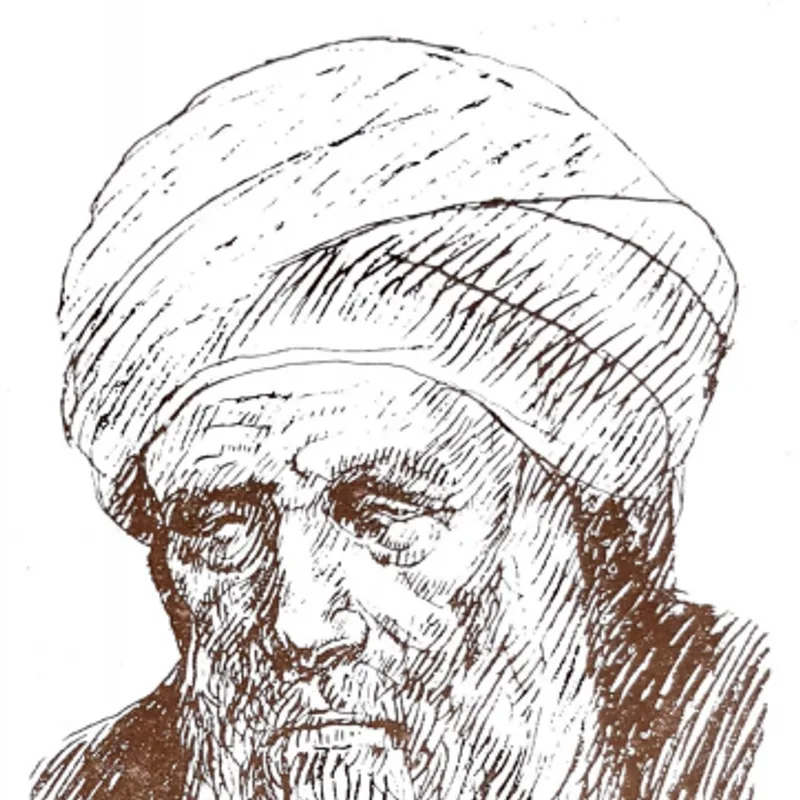
Al-Ma'arri
Poet, Philosopher, 973–1057
Skeptic of all creeds
What is the meaning of life?
Life is suffering; sparing children from it is a kindness.
Abu al-ʿAlaʾ al-Maʿarri lost his sight to smallpox as a child in Maʿarrat al-Nuʿman, in northern Syria, studied in Aleppo and Baghdad, and after 1010 lived as a recluse at home, calling himself a double prisoner, of blindness and of his house. He ate no meat, eggs, milk or honey, out of pity for animals. His poems are among the darkest in Arabic: life is a burden of suffering, so he never married or had children, and he is said to have asked for an epitaph declaring that his father had wronged him by begetting him, a wrong he had done to no one.
-
“Whenever I reflect, my reflecting upon what I suffer only rouses me to blame him that begot me. / And I gave peace to my children, for they are in the bliss of non-existence which surpasses all the pleasures of this world. / Had they come to life, they would have endured a misery casting them to destruction in trackless wildernesses.”1
-
“This wrong was by my father done / To me, but ne’er by me to one.”2
What is the meaning of the universe?
People have brains without religion, or religion without brains.
Al-Maʿarri trusted reason above custom and revelation, and attacked the clergy of every faith, Muslim, Christian, Jewish and Zoroastrian, as deceivers who exploit the credulous. His most quoted verse divides the world into intelligent people without religion and religious people without intelligence. Whether he believed in God at all is still debated: early Western scholars called him a deist, a freethinker or an atheist, while others read his work as the faith of a stern rationalist who believed in a Creator but in no creed.
-
“The world holds two classes of men; intelligent men without religion, and religious men without intelligence.”3