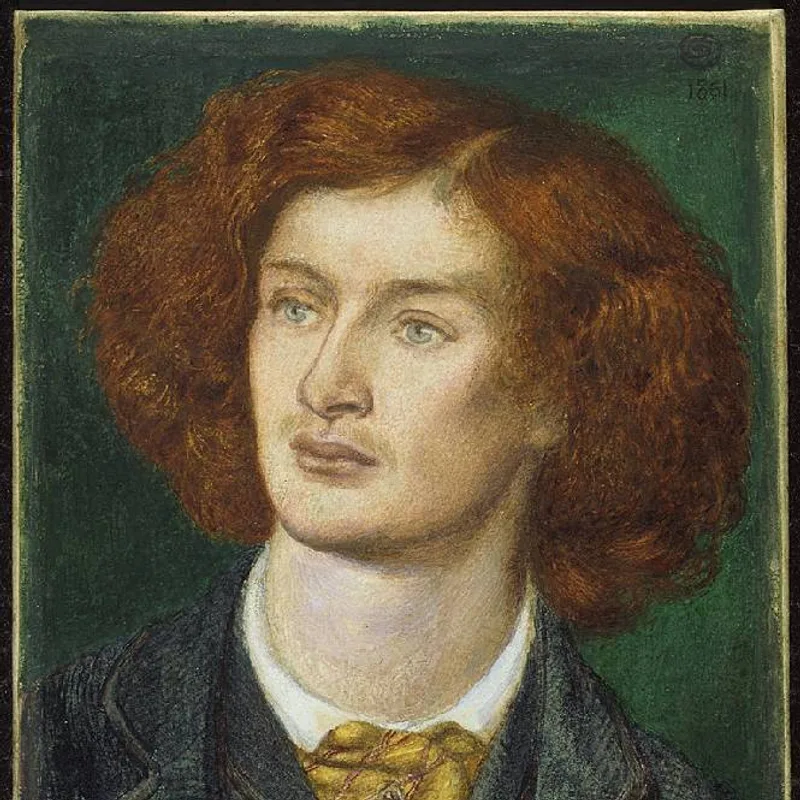
Algernon Charles Swinburne
Poet, Critic, 1837–1909
Pagan pantheist, anti-clerical
What is the meaning of life?
No life lives for ever; even the weariest river reaches the sea.
Swinburne scandalised Victorian England with Poems and Ballads (1866), whose pagan sensuality and open revolt against Christian morality made him the most notorious poet of his day; years of heavy drinking brought him close to collapse, and he spent his last three decades in the care of his friend Theodore Watts-Dunton in Putney. “The Garden of Proserpine”, from that first collection, takes the weariness of living seriously: set free from too much love of life, from hope and from fear, the poem thanks whatever gods may be that no life lives for ever, that the dead rise up never, and that even the weariest river winds somewhere safe to sea. Death, in it, is not punishment but rest.
-
“From too much love of living, / From hope and fear set free, / We thank with brief thanksgiving / Whatever gods may be / That no life lives for ever; / That dead men rise up never; / That even the weariest river / Winds somewhere safe to sea.”1
What is the meaning of the universe?
Out of the Earth come God and man; she is the soul.
In “Hymn to Proserpine” Swinburne mourned the pagan gods and accused Christianity of turning the world grey, and his politics were as rebellious as his verse: Songs before Sunrise (1871) was written for the cause of Italian freedom and dedicated to its prophet, Giuseppe Mazzini. In “Hertha”, one of its central poems, the speaker is the Earth herself, the life-force older than any god: out of her come God and man, and before God was, she is. The book ends its “Hymn of Man” with a hymn not to God but to humanity, the master of things. Swinburne later insisted that every line of Songs before Sunrise came straight from his own heart, in obedience to Sir Philip Sidney's precept: “Look in thine heart, and write.”