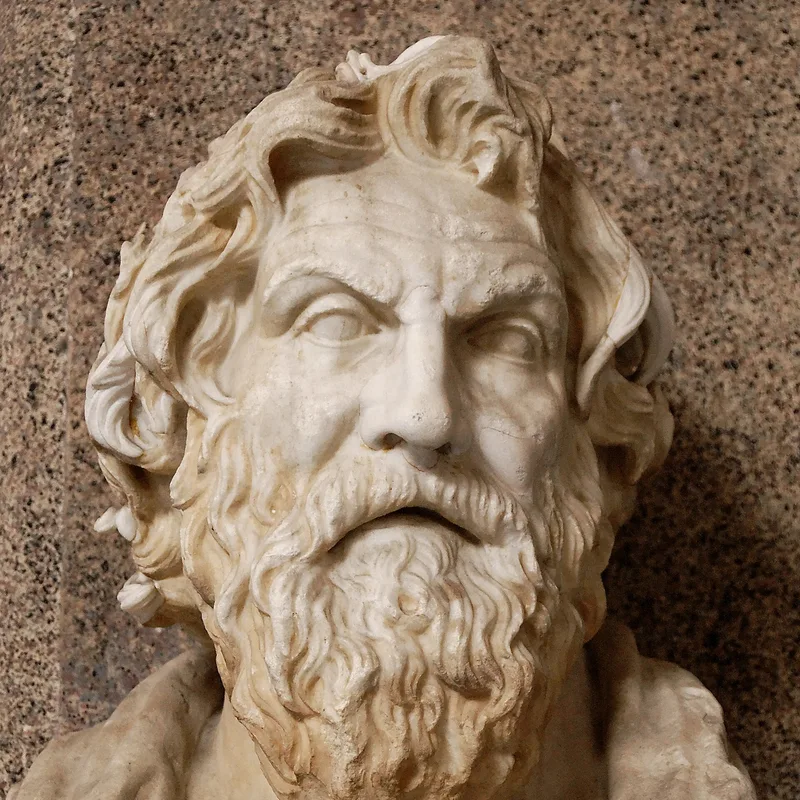
Antisthenes
Philosopher, c. 446 – c. 366 BC
Virtue alone suffices
What is the meaning of life?
Virtue is enough for happiness, and no one can take it away.
Antisthenes was a devoted pupil of Socrates, walking up every day from the Piraeus to hear him, and was with him when he died. Afterwards he taught at the Cynosarges gymnasium in Athens, and Diogenes Laërtius saw in him the source of Diogenes the Cynic's indifference and of the Stoics' hardihood. He held that virtue can be taught, that it lies in deeds rather than words, and that it is sufficient by itself for happiness, needing nothing but the strength of a Socrates. He distrusted pleasure so much that he said he would rather go mad than feel it; asked what was the height of human bliss, he answered: to die happy.
What is the meaning of the universe?
Many gods by custom, but by nature only one.
In a lost book called The Natural Philosopher, Antisthenes drew a distinction that Cicero preserves: there are many gods according to the customs of the peoples, but only one according to nature. It is one of the earliest statements of a philosophical monotheism lying behind the gods of the cities. He also taught that those who wish to be immortal must live piously and justly, tying whatever comes after death to the way we live now.