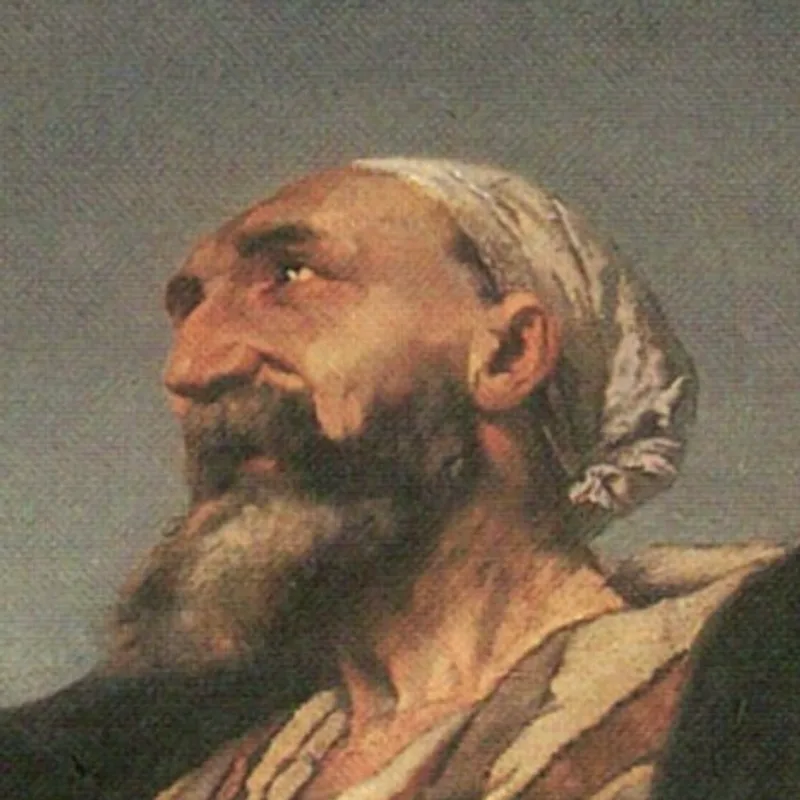
Hafez
Poet, c. 1325 – 1390
Sufi, scourge of hypocrites
What is the meaning of life?
Untie your heart's care; drink and love, come what may.
Hafez spent almost all his life in Shiraz, where, as his pen name (“one who has memorised”) implies, he is said to have known the whole Qur'an by heart; he served as a poet at the courts of a succession of rulers and left some five hundred ghazals, short lyrics of wine, love and longing in which the tavern and the beloved are at once earthly and mystical. In Iran his Divan is still found in almost every home, and people open it at random to read their fortunes. His answer to the passing of time and the fixed decrees of fate is joy: whatever comes, loosen the knot of the heart's care.
-
“The secret draught of wine and love repressed / Are joys foundationless—then come whate’er / May come, slave to the grape I stand confessed! / Unloose, oh friend, the knot of thy heart’s care, / Despite the warning that the Heavens reveal!”1
What is the meaning of the universe?
No astronomer ever untied the knot of Fate the heavens conceal.
Hafez was a Muslim and a Sufi, but his poems mock the preachers, judges and ascetics who make a show of piety while their hearts are black, and they treat the mystery of the world as something no reasoning can solve: no astronomer, for all his thought, has ever untied the knot of Fate that the heavens hide. Time's revolving sphere has rolled over a thousand lives like ours, and the dust of ancient kings is in the clay of the cup we drink from. What remains is love, and wine in its earthly and mystical senses, and the trust that even one drowned in sin may find a place in God's paradise.
-
“For all his thought, never astronomer / That loosed the knot of Fate those Heavens conceal! / Not all the changes that thy days unfold / Shall rouse thy wonder; Time’s revolving sphere / Over a thousand lives like thine has rolled.”1
-
“And when the spirit of Hafiz has fled, / Follow his bier with a tribute of sighs; / Though the ocean of sin has closed o’er his head, / He may find a place in God’s Paradise.”2