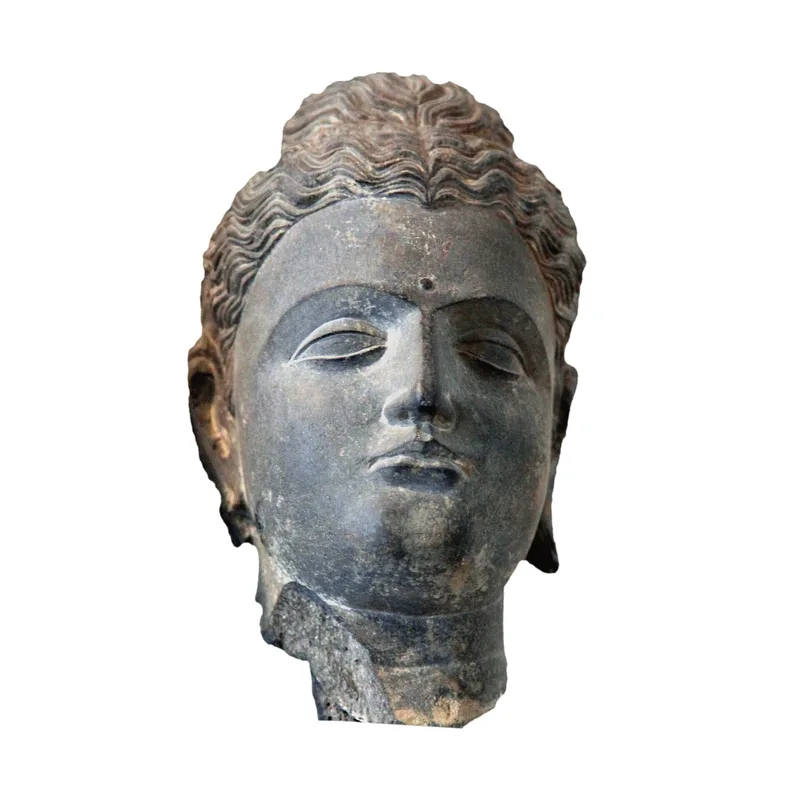
Buddha
Spiritual teacher, Founder of Buddhism, c. 563 – c. 483 BC
Middle Way
What is the meaning of life?
To end suffering by letting go of the craving behind it.
The Buddha did not ask what life is for; he asked what is wrong with it and whether that can be ended. In his first sermon at Sarnath, as recorded in the Pali Canon, he set out four truths: life as it is lived is dukkha — suffering, unsatisfactoriness — from birth to death; dukkha arises from craving; it can cease; and the eightfold path leads to its cessation. That cessation, nibbana, is the point of the holy life, he said — not gain, virtue, concentration or knowledge, which are only the bark and leaves of the tree. The Dhammapada compresses the programme into one line: avoid evil, cultivate good, cleanse the mind.
-
“Suffering, as a noble truth, is this: Birth is suffering, aging is suffering, sickness is suffering, death is suffering, sorrow and lamentation, pain, grief and despair are suffering; association with the loathed is suffering, dissociation from the loved is suffering, not to get what one wants is suffering — in short, suffering is the five categories of clinging objects.”1
-
“The origin of suffering, as a noble truth, is this: It is the craving that produces renewal of being accompanied by enjoyment and lust, and enjoying this and that; in other words, craving for sensual desires, craving for being, craving for non-being. Cessation of suffering, as a noble truth, is this: It is remainderless fading and ceasing, giving up, relinquishing, letting go and rejecting, of that same craving.”1
-
“Monks, this holy life doesn't have as its reward gain, offerings, & fame, doesn't have as its reward consummation of virtue, doesn't have as its reward consummation of concentration, doesn't have as its reward knowledge & vision, but the unprovoked awareness-release: That is the purpose of this holy life, that is its heartwood, that its final end.”2
-
“To avoid all evil, to cultivate good, and to cleanse one's mind — this is the teaching of the Buddhas.”3
What is the meaning of the universe?
Beginningless and conditioned; no maker; the rest set aside.
Asked whether the cosmos is eternal or finite, or whether an awakened one exists after death, the Buddha declined to answer. In the Cula-Malunkyovada Sutta he compares the man who insists on such answers to one shot with a poisoned arrow who refuses treatment until he knows who shot it: the questions do not lead to the end of suffering. What he did teach was conditionality — things arise and cease depending on other things — and a round of rebirth with no discoverable beginning. His cosmos has gods, but no maker: in the Kevatta Sutta the Great Brahma, hailed as Maker and Creator, admits in private that he does not know where the elements end. The cosmos itself, he told the deva Rohitassa, is found within this fathom-long body.
-
“'The cosmos is eternal,' is undeclared by me. 'The cosmos is not eternal,' is undeclared by me. … And why are they undeclared by me? Because they are not connected with the goal, are not fundamental to the holy life. They do not lead to disenchantment, dispassion, cessation, calming, direct knowledge, self-awakening, Unbinding. That's why they are undeclared by me.”4
-
“I tell you, friend, that it is not possible by traveling to know or see or reach a far end of the cosmos where one does not take birth, age, die, pass away, or reappear. … Yet it is just within this fathom-long body, with its perception & intellect, that I declare that there is the cosmos, the origination of the cosmos, the cessation of the cosmos, and the path of practice leading to the cessation of the cosmos.”5
-
“From an inconstruable beginning comes transmigration. A beginning point is not evident, though beings hindered by ignorance and fettered by craving are transmigrating & wandering on.”6
-
“Then the Great Brahma, taking the monk by the arm and leading him off to one side, said to him, 'These gods of the retinue of Brahma believe, "There is nothing that the Great Brahma does not know. There is nothing that the Great Brahma does not see. There is nothing of which the Great Brahma is unaware. There is nothing that the Great Brahma has not realized." That is why I did not say in their presence that I, too, don't know where the four great elements... cease without remainder.'”7