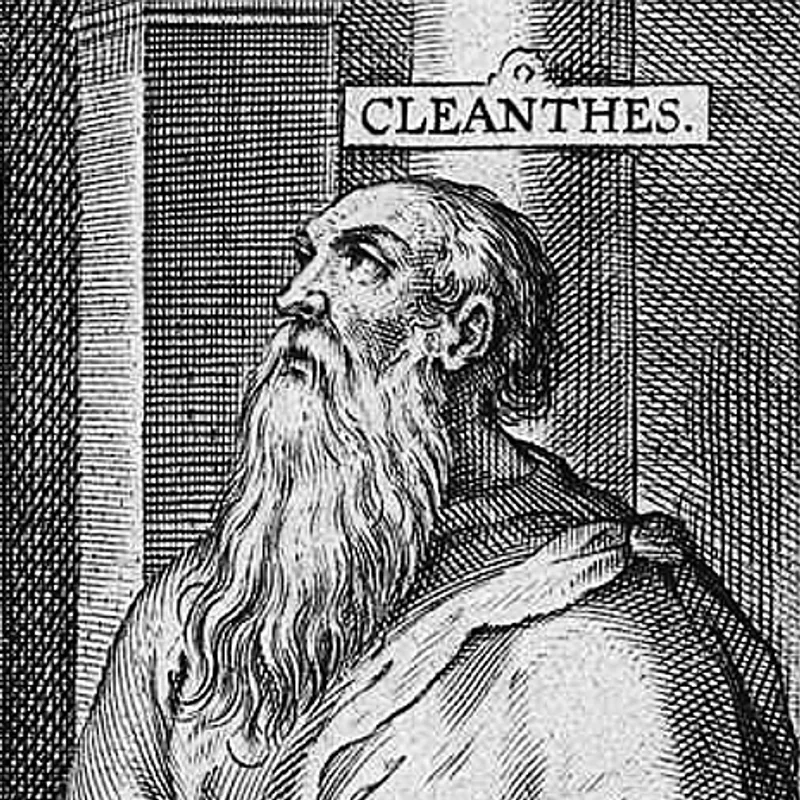
Cleanthes
Philosopher, c. 330 – c. 230 BC
Stoic hymnist of Zeus
What is the meaning of life?
Follow willingly wherever Zeus and destiny lead.
Cleanthes of Assos was a former boxer who came to Athens with almost nothing and studied for years under Zeno, earning his living by drawing water for gardens at night; he succeeded Zeno as head of the Stoic school around 262 BC. He taught that the goal of life is to live in agreement with nature, and that wisdom lies in accepting what fate brings. His prayer to be led by Zeus and destiny, which Epictetus and Seneca loved to quote, says that the willing are led and the unwilling dragged: one follows either way, so it is better to follow freely.
-
“Conduct me, Jove, and you, O Destiny, / Wherever your decrees have fixed my station.”1
What is the meaning of the universe?
Zeus, sovereign of nature, steers the world in harmony with law.
Cleanthes' Hymn to Zeus is the most complete surviving poem of early Stoicism. Zeus in it is no longer a figure of myth but the rational law that pervades and governs the whole universe, the fire and reason in all things; human beings alone among creatures share his reason and so are his offspring. Evil comes from people who ignore that law in their pursuit of fame, wealth or pleasure, and the hymn ends with a prayer that Zeus free them from ignorance.
-
“Most glorious of Immortals, mighty God, / Invoked by many a name, O sovran King / Of universal Nature, piloting / This world in harmony with Law,—all hail!”2