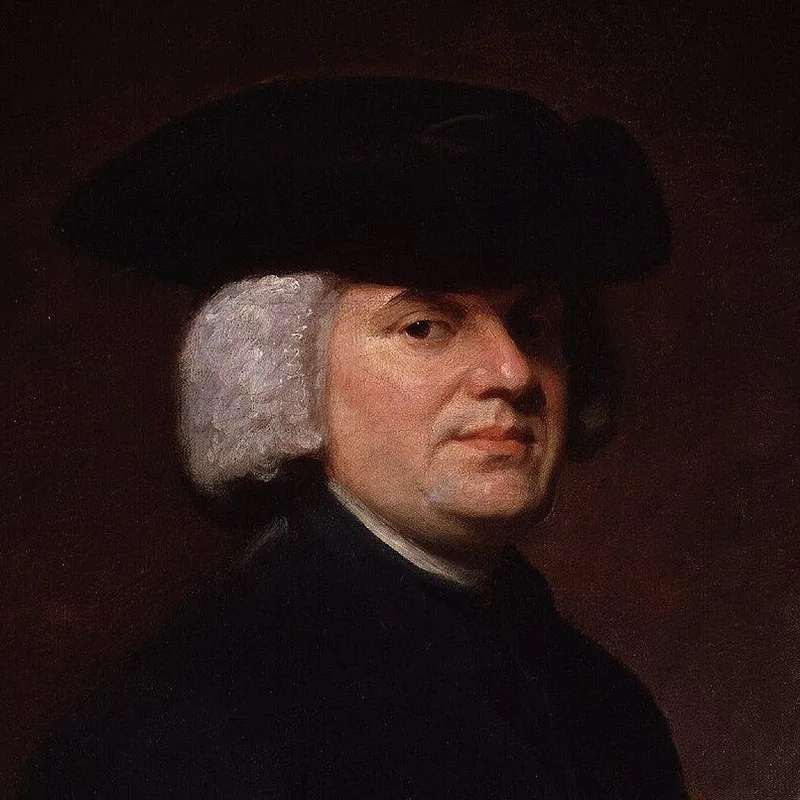
William Paley
Theologian, Philosopher, 1743–1805
Natural theologian
What is the meaning of life?
God made us wishing our happiness; virtue serves it.
Paley was an Anglican clergyman and Cambridge tutor whose textbooks were required reading at the university for decades. In The Principles of Moral and Political Philosophy (1785) he grounded ethics in a theological utilitarianism: God wills the happiness of his creatures, so actions are right as they tend to promote it, and virtue means doing good to mankind in obedience to the will of God. The same book condemned slavery as an abominable tyranny.
-
“God, when he created the human species, wished their happiness; and made for them the provision which he has made, with that view, and for that purpose.”1
What is the meaning of the universe?
Nature shows design, and design points to an intelligent mind.
Paley's Natural Theology (1802) opens with the most famous image of the argument from design. If you found a stone on a heath, you might suppose it had always been there; but if you found a watch, its parts plainly put together for a purpose would show that it had a maker. The contrivances of nature, from the eye to the joints of the body, are greater and more numerous still, and so point to an intelligent mind behind the world. Charles Darwin admired the book as a student and later offered natural selection as another explanation of the same evidence.
-
“It is a step to have it proved, that there must be something in the world more than what we see. It is a further step to know, that, amongst the invisible things of nature, there must be an intelligent mind, concerned in its production, order, and support.”2