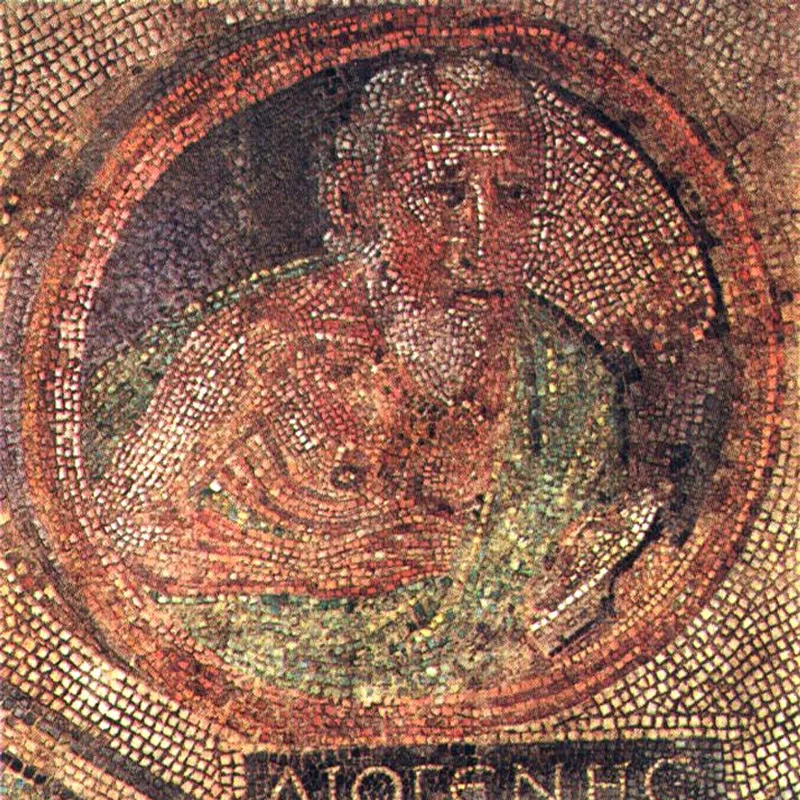
Diogenes of Sinope
Philosopher, c. 412 – 323 BC
Cynic
What is the meaning of life?
Live simply, as nature recommends; be a citizen of the world.
Exiled from Sinope on the Black Sea, Diogenes lived in Athens and later in Corinth in deliberate poverty, sleeping in a large storage jar and owning almost nothing. He taught by example and by insult: instead of useless toils, people should choose the labours that nature recommends, and so live happily, needing as little as an animal does. Asked where he came from, he said that he was a citizen of the world, an answer often taken as the origin of the word cosmopolitan.
What is the meaning of the universe?
Follow nature; the gods' favours to the pious are unproven.
Diogenes had little patience with the religion around him. He rebuked people for praying for whatever seemed good to them rather than for what is truly good, and laughed at those who sacrificed to the gods for health and then feasted to the ruin of their health. When someone marvelled at the thank-offerings at Samothrace, left by sailors saved from storms, he is said to have remarked that there would be far more if those who drowned had made offerings too, though some ancient writers gave the line to Diagoras of Melos. He still reasoned that everything belongs to the gods and that the wise are their friends, but his practical guide was nature, not the temple.
-
“When some one expressed astonishment at the votive offerings in Samothrace, his comment was, “There would have been far more, if those who were not saved had set up offerings.””3
-
“All things belong to the gods. The wise are friends of the gods, and friends hold things in common. Therefore all things belong to the wise.”4