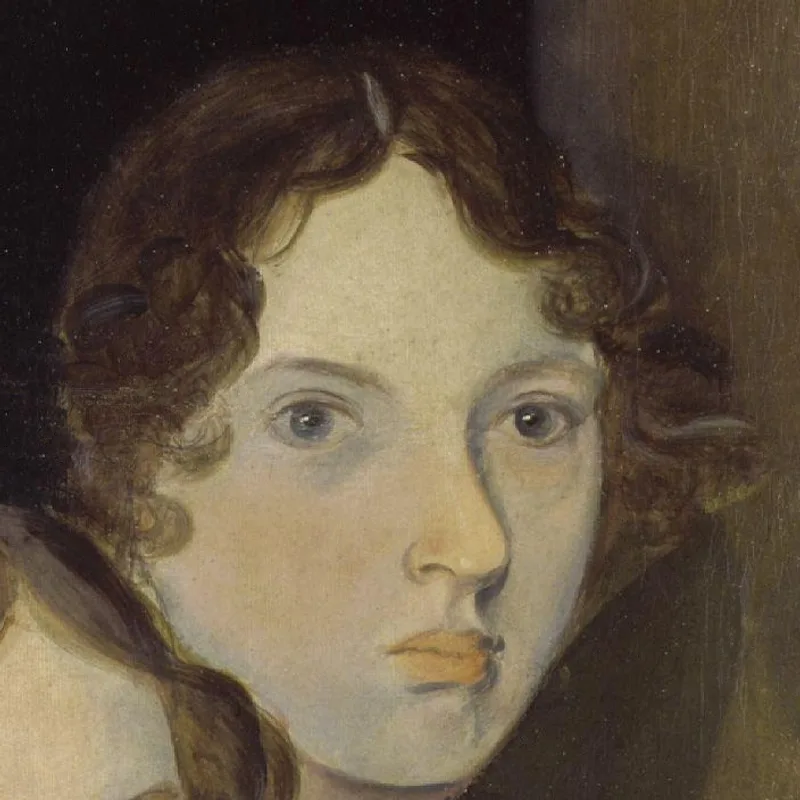
Emily Brontë
Novelist, Poet, 1818–1848
Mystic, beyond all creeds
What is the meaning of life?
A chainless soul, with courage to endure.
Emily Brontë spent almost all her life at the parsonage in Haworth, on the Yorkshire moors, with her father and her sisters Charlotte and Anne; she taught briefly, studied in Brussels and kept house. She published one novel, Wuthering Heights (1847), under the name Ellis Bell, and died of tuberculosis a year later, at thirty. Her poems ask little of the world: not riches, not love, not fame, only freedom. “The Old Stoic”, printed in the sisters' first book of poems in 1846, asks for a chainless soul in life and death, with courage to endure.
-
“Riches I hold in light esteem; / And Love I laugh to scorn; / And lust of fame was but a dream / That vanished with the morn: / And if I pray, the only prayer / That moves my lips for me / Is, “Leave the heart that now I bear, / And give me liberty!” / Yes, as my swift days near their goal, / 'Tis all that I implore; / In life and death, a chainless soul, / With courage to endure.”1
What is the meaning of the universe?
God within the breast, in whom every existence would exist.
Brontë was brought up in the Church of England by a clergyman father, but her poems have little to do with church teaching. “No Coward Soul Is Mine”, written in January 1846, calls the thousand creeds that move men's hearts unutterably vain and turns instead to a God within her own breast: a Spirit that pervades all things, changes, sustains, dissolves and creates them, and in whom everything would go on existing even if earth and moon and suns were gone. Charlotte, who published it after her sister's death, said it was the last poem Emily wrote; it was not, but it has been read ever since as her creed.
-
“O God within my breast, / Almighty, ever-present Deity! / Life — that in me has rest, / As I — undying Life — have power in Thee! / Vain are the thousand creeds / That move men's hearts: unutterably vain; / Worthless as withered weeds, / Or idlest froth amid the boundless main.”2
-
“With wide-embracing love / Thy Spirit animates eternal years, / Pervades and broods above, / Changes, sustains, dissolves, creates, and rears. / Though earth and moon were gone, / And suns and universes ceased to be, / And Thou wert left alone, / Every existence would exist in Thee.”2