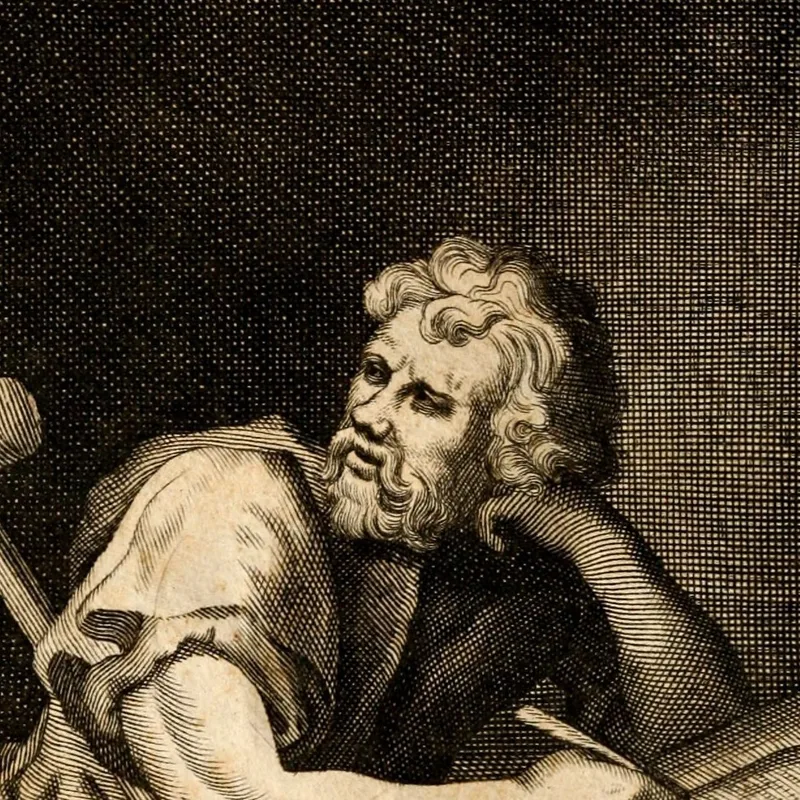
Epictetus
Stoic philosopher, Teacher, c. 50 – c. 135
Stoic
What is the meaning of life?
Care only for what is up to you; accept the rest.
Epictetus was born a slave in Phrygia, was freed, and taught philosophy in Rome until the emperor Domitian banished philosophers from the city around AD 93; he then opened a school at Nicopolis in Greece. He wrote nothing himself: his student Arrian took down his talks as the Discourses and condensed them into the Handbook (Enchiridion). His whole teaching starts from one division: some things are up to us, such as our judgments, desires and aversions, and others are not, such as body, property and reputation. Freedom and peace of mind come from caring only for the first, and from wanting events to happen as they do happen.
-
“There are things which are within our power, and there are things which are beyond our power. Within our power are opinion, aim, desire, aversion, and, in one word, whatever affairs are our own.”1
-
“Demand not that events should happen as you wish; but wish them to happen as they do happen, and you will go on well.”2
What is the meaning of the universe?
A rational God orders all; we are here to watch and understand.
Like the other Stoics, Epictetus saw the world as ordered by a rational and provident God, whom he often calls Zeus, and human reason as a fragment of that God. A human being differs from the animals in being able not only to use things but to understand them, and so has a place in the world that animals do not. God, he says in the Discourses, brought us into the world to watch his works and to explain them. Piety, in the Handbook, means thinking rightly about the gods as governing the universe well, and then following events willingly instead of blaming them.