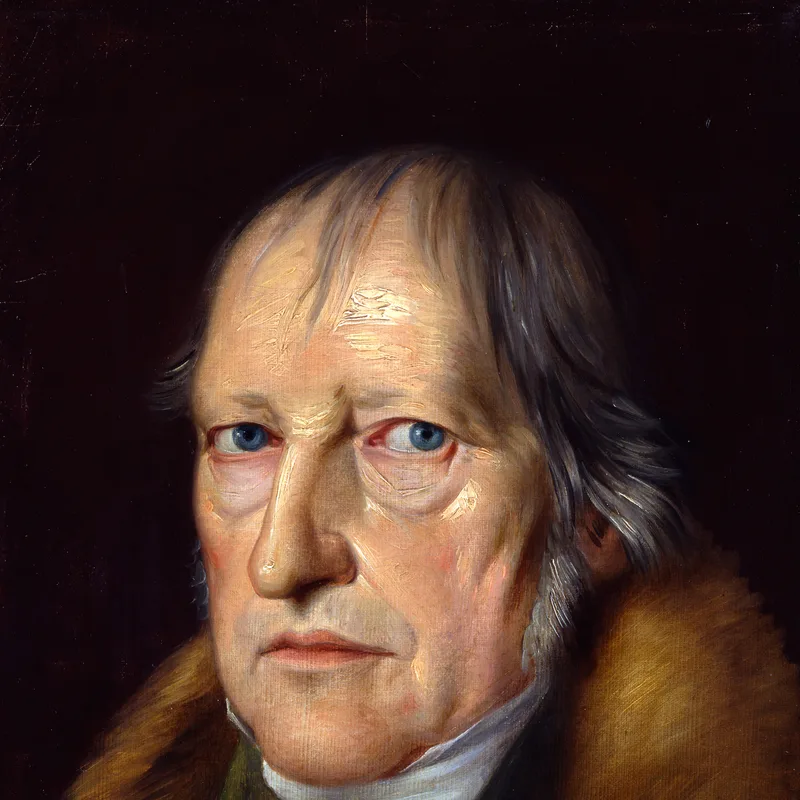
Georg Wilhelm Friedrich Hegel
Philosopher, 1770–1831
Absolute idealist
What is the meaning of life?
History is the progress of the consciousness of freedom.
Hegel studied theology at Tübingen with the poet Hölderlin and the philosopher Schelling, and ended his career as the most celebrated philosopher in Germany, at the University of Berlin. He saw individual lives as part of a larger story: the history of the world is freedom becoming conscious of itself, from societies in which one ruler was free, through those in which some were, to the modern conviction that all human beings are free. Individuals serve that purpose through their own interests and passions, often without knowing it, and nothing great is achieved without passion.
What is the meaning of the universe?
Reason rules the world; what is rational is real.
For Hegel reality is not dead matter but Spirit, or Reason, coming to know itself: first in nature, then in human history, art, religion and philosophy. Religion and philosophy, he held, have the same content, God, but religion grasps it in images and philosophy in concepts. He called the history of the world the carrying out of God's plan, and philosophy the attempt to understand that plan. Critics accused him of pantheism, of dissolving God into the world, a charge he rejected; he regarded himself as a Lutheran.