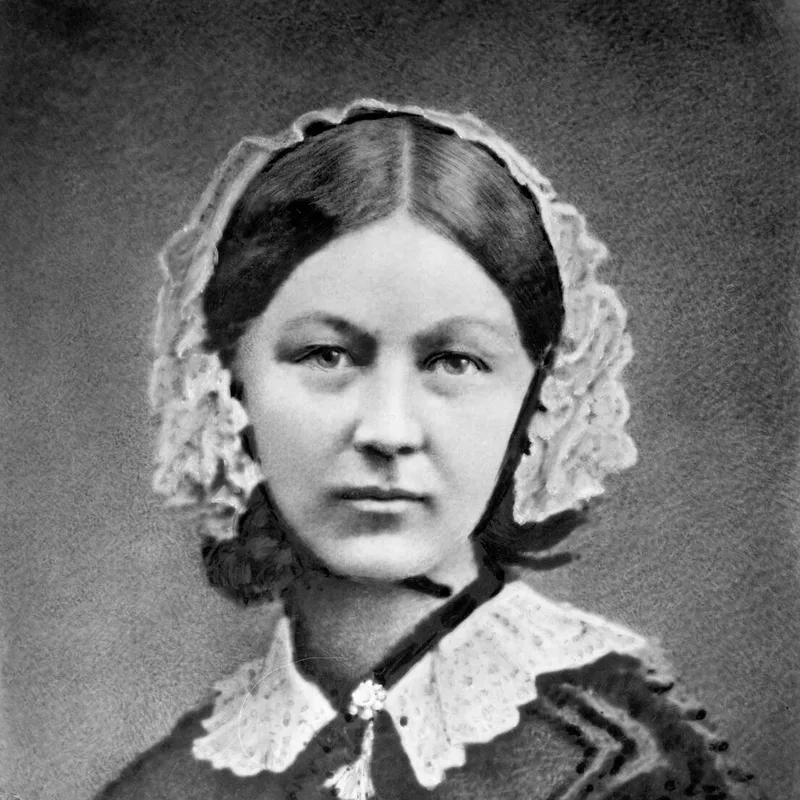
Florence Nightingale
Nurse, Statistician, Social reformer, 1820–1910
Unorthodox Christian mystic
What is the meaning of life?
Distil your feelings into actions, and actions that bring results.
Nightingale was born into a wealthy family that expected her to marry; she felt called by God at sixteen and fought her family for years before she could train as a nurse. In the Crimean War she led the nurses at Scutari and became “the Lady with the Lamp”; afterwards she used statistics and relentless lobbying to reform army hospitals, public health in India and nursing itself, founding the first secular nursing school at St Thomas' Hospital in 1860. She distrusted fine sentiment: feelings, she wrote, waste themselves in words; they ought to be distilled into actions, and into actions that bring results.
-
“I think one's feelings waste themselves in words; they ought all to be distilled into actions and into actions which bring results.”1
-
“I never lose an opportunity of urging a practical beginning, however small, for it is wonderful how often in such matters the mustard-seed germinates and roots itself.”2
What is the meaning of the universe?
God works through law; law brings us back to God.
Nightingale's faith was deep and unorthodox. In Suggestions for Thought, a long theological work she had privately printed in 1860, she rejected eternal punishment and saw God not as a judge but as a teacher, whose worlds are schools rather than places of trial. God works through law, and to discover the laws of nature, through statistics above all, is to learn God's purpose: law is not a reason for thinking God absent but the continuous manifestation of his presence.
-
“Law is the continuous manifestation of God's presence — not reason for believing him absent. … Law brings us continually back to God instead of carrying us away from him.”3