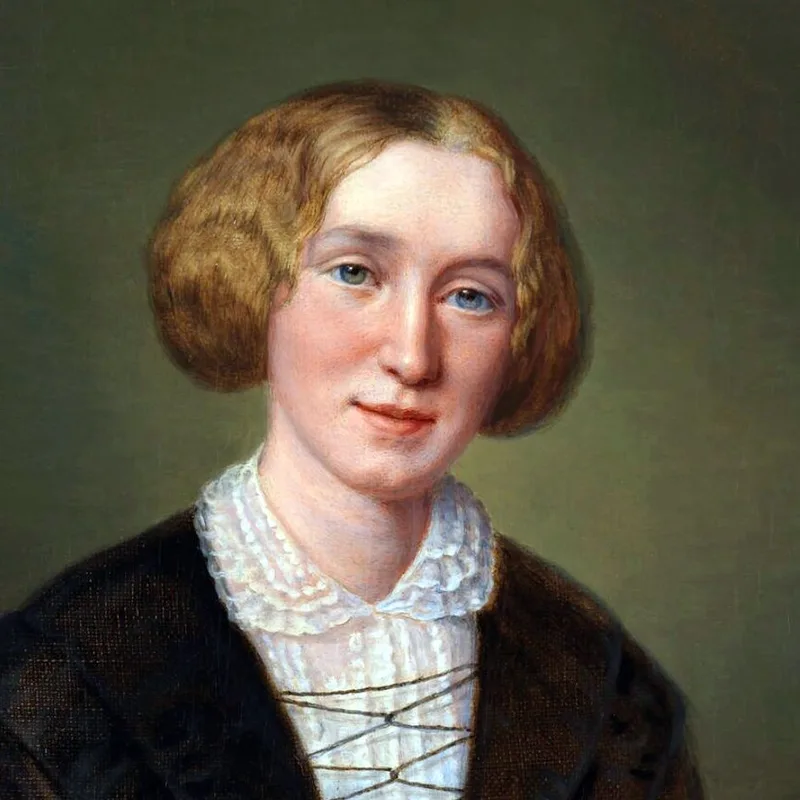
George Eliot
Novelist, Translator, 1819–1880
Religion of humanity
What is the meaning of life?
The world's good grows through unhistoric acts and hidden lives.
George Eliot was the pen name of Mary Ann Evans, who grew up an earnest evangelical and lost her faith in her early twenties, refusing for a time even to go to church with her father. She translated David Strauss's Life of Jesus and Ludwig Feuerbach's Essence of Christianity, and went on to write some of the greatest English novels, Middlemarch above all. Her novels ask how ordinary people can live well without a heroic stage. Middlemarch ends with the thought that the growing good of the world depends partly on unhistoric acts, and on the many who lived faithfully a hidden life.
-
“…for the growing good of the world is partly dependent on unhistoric acts; and that things are not so ill with you and me as they might have been, is half owing to the number who lived faithfully a hidden life, and rest in unvisited tombs.”1
What is the meaning of the universe?
No personal God or afterlife; we live on in better minds.
After leaving Christianity, Eliot did not become a crusading atheist. She kept a deep respect for religious feeling but placed its object in humanity rather than in God: duty and sympathy toward others, not the hope of reward or the fear of punishment, were what mattered. In her poem “O May I Join the Choir Invisible” (1867), the only immortality she hopes for is to live on in minds made better by her presence.
-
“Oh may I join the choir invisible / Of those immortal dead who live again / In minds made better by their presence; live / In pulses stirred to generosity, / In deeds of daring rectitude…”2