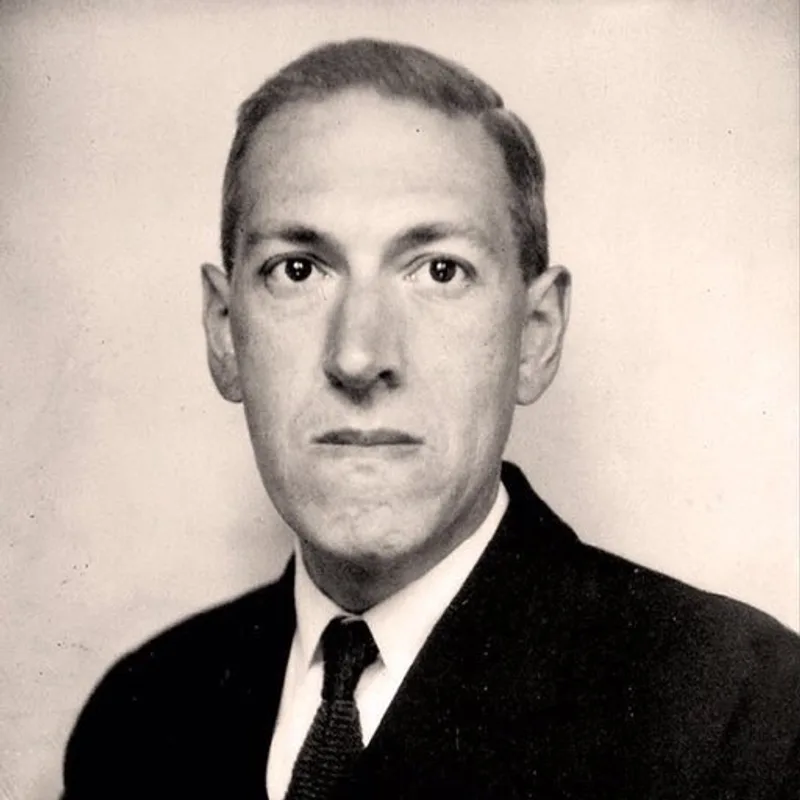
H. P. Lovecraft
Writer, 1890–1937
Atheist, cosmicist
What is the meaning of life?
Lessen the agony of existence; find pleasure in wonder.
Lovecraft spent nearly all his short life in Providence, Rhode Island, writing stories for pulp magazines like Weird Tales and tens of thousands of letters to friends; he died poor at forty-six, almost unknown, and became one of the most influential horror writers of the twentieth century, the creator of Cthulhu. In essays of 1921 he set out his own creed: since nothing is good or bad from the cosmos's point of view, the only sensible human scale of values is one based on lessening the agony of existence. His own pleasure, he wrote, was wonder: the unexplored, the unexpected, the thing that is hidden. His letters also show the racist views of his time and class, which he only partly softened late in life.
What is the meaning of the universe?
A blind, mechanical cosmos, indifferent to us: only mindless fate.
Lovecraft was a materialist and an atheist, and his fiction grew out of what he called cosmicism: the sense that humanity is a trivial accident in a vast, indifferent universe whose laws have nothing to do with our hopes. Good and evil, he wrote, are local expedients, not cosmic truths; there are no absolute values in the blind tragedy of mechanistic nature, and the only cosmic reality is mindless, undeviating fate. What interested him as a writer was not man's relation to man but man's relation to the cosmos, to the unknown.
-
“There are no absolute values in the whole blind tragedy of mechanistic nature—nothing is good or bad except as judged from an absurdly limited point of view. The only cosmic reality is mindless, undeviating fate—automatic, unmoral, uncalculating inevitability.”1
-
“It is man's relation to the cosmos—to the unknown—which alone arouses in me the spark of creative imagination.”2