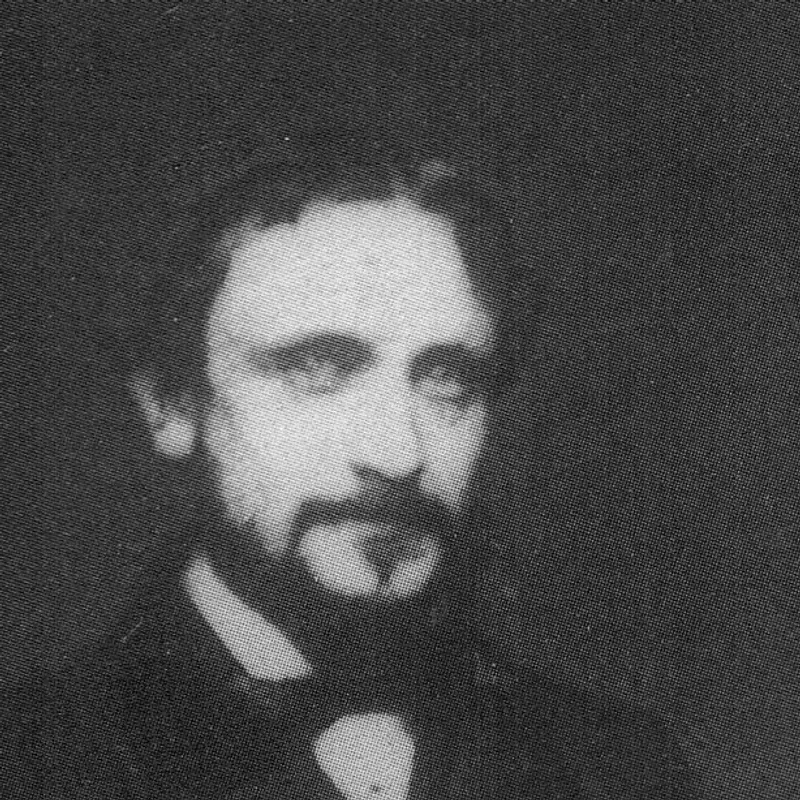
James Thomson (B.V.)
Poet, 1834–1882
Pessimist and atheist
What is the meaning of life?
Life costs more than it pays; death is the one sure sleep.
Thomson was a Scottish poet who signed himself B.V., for Bysshe Vanolis, after Shelley and Novalis. Raised in a London orphanage, he became an army schoolmaster, was dismissed, and lived as a poorly paid journalist for the secularist press, struggling with insomnia, poverty and drink. His long poem The City of Dreadful Night (1874) is one of the bleakest works in English: a nightmare city of the sleepless, where life has no aim that repays its pain, and the only consolation is the sleep that never wakes again.
-
“And all sad scenes and thoughts and feelings vanish / In that sweet sleep no power can ever banish, / That one best sleep which never wakes again.”1
-
“What good, what use, what aim? / What compensation for the throes of birth / And death in all its frame? / What conscious life hath ever paid its cost? / From Nothingness to Nothingness — all lost!”2
What is the meaning of the universe?
The world turns like a mill, with no purpose, heart or mind.
Thomson lost his faith as a young man and became a convinced atheist. In The City of Dreadful Night a preacher tells the sleepless crowd that there is no God and no devil who made us to torment us, so no one is to blame; the universe simply grinds on, producing life and death, good and ill, without any purpose, heart, mind or will. The poem first appeared in the National Reformer, the paper of his friend, the secularist leader Charles Bradlaugh.
-
“The world rolls round for ever like a mill; / It grinds out death and life and good and ill; / It has no purpose, heart or mind or will.”3