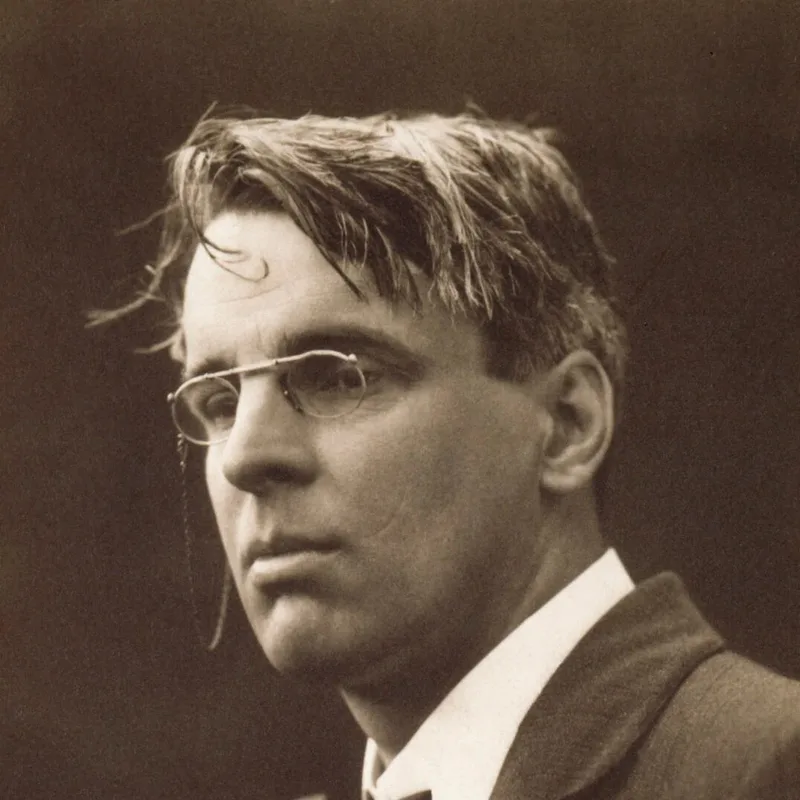
W. B. Yeats
Poet, Playwright, 1865–1939
Occultist and mystic
What is the meaning of life?
An old man is nothing unless his soul learns to sing louder.
Yeats led the Irish Literary Revival, co-founded the Abbey Theatre, served as a senator of the new Irish Free State and won the Nobel Prize in Literature in 1923; his poems turned again and again to love, Ireland and growing old. “Sailing to Byzantium”, written when he was past sixty, faces age head on: an old man is a paltry thing, a tattered coat upon a stick, unless his soul learns to sing louder for every tatter in its mortal dress, and the place to learn that singing is in the monuments of the soul's own magnificence, in art. He went on writing to the end, and the poems of his seventies are among his angriest and most sensual.
-
“An aged man is but a paltry thing, / A tattered coat upon a stick, unless / Soul clap its hands and sing, and louder sing / For every tatter in its mortal dress…”1
What is the meaning of the universe?
Out of the dying animal, gathered into the artifice of eternity.
Yeats was raised by a sceptical father and could not accept the Christianity of his childhood, but he could not live without religion either: he joined the Theosophists and the occult Hermetic Order of the Golden Dawn, attended séances, and with his wife, who practised automatic writing, built the private cosmology of gyres and lunar phases set out in A Vision (1925). “Sailing to Byzantium” imagines the soul, fastened to a dying animal that does not know what it is, asking the sages in God's holy fire to gather it into the artifice of eternity. He was buried, as he had wished, in the churchyard at Drumcliff in County Sligo, where his great-grandfather had been rector.
-
“O sages standing in God's holy fire / As in the gold mosaic of a wall, / Come from the holy fire, perne in a gyre, / And be the singing masters of my soul. / Consume my heart away; sick with desire / And fastened to a dying animal / It knows not what it is; and gather me / Into the artifice of eternity.”1