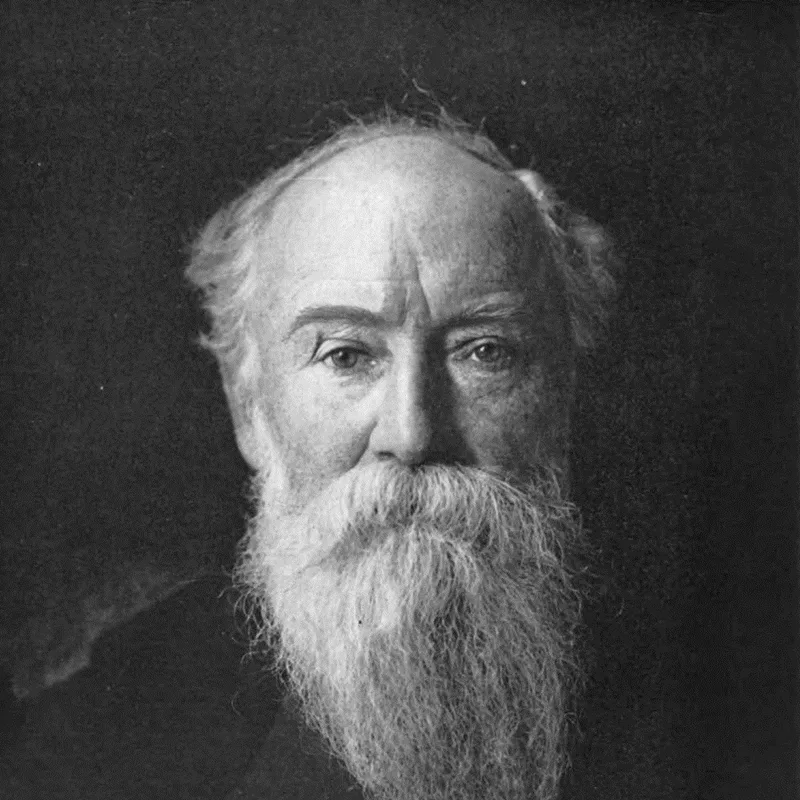
John Burroughs
Naturalist, Essayist, 1837–1921
Reverent naturalist
What is the meaning of life?
Find joy in the simple life: air, water, stars, wildflowers.
Burroughs grew up on a dairy farm in the Catskills and became the most popular American nature writer of his day, the author of some thirty books of essays on birds, woods and farm life. A friend of Walt Whitman, he later went camping with Thomas Edison, Henry Ford and Harvey Firestone, and he spent his last decades at a rustic cabin, Slabsides, in the Hudson Valley. His idea of a good life was simple: to find the elements enough, to be refreshed by a morning walk and thrilled by the stars, and to be elated by a bird's nest or a wildflower in spring.
-
“To find the universal elements enough; to find the air and the water exhilarating; to be refreshed by a morning walk or an evening saunter... to be thrilled by the stars at night; to be elated over a bird's nest or a wildflower in spring — these are some of the rewards of the simple life.”1
What is the meaning of the universe?
Theology passes; awe before the vast, mysterious universe remains.
Burroughs lost his belief in the God of the churches early and came to see the old theology as outgrown, but he never lost his reverence. In The Light of Day (1900) and Accepting the Universe (1920) he argued that what survives the decline of creeds is religion as a feeling of awe before the vastness and mystery of the universe. God, for him, was not a person standing outside nature but the life and order of nature itself.
-
“Theology passes; religion, as a sentiment or feeling of awe and reverence in the presence of the vastness and mystery of the universe, remains.”2