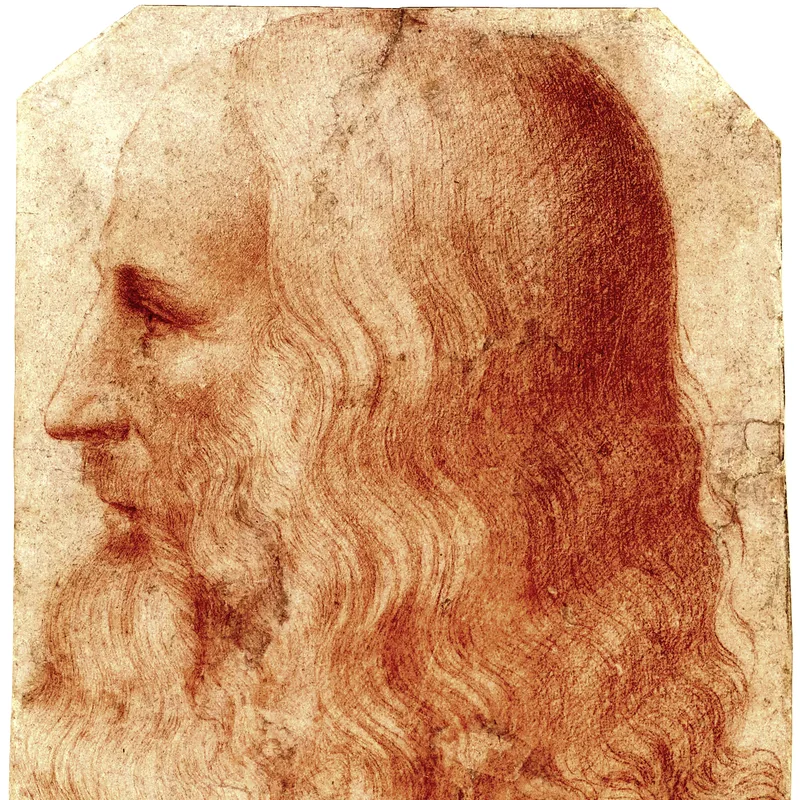
Leonardo da Vinci
Painter, Engineer, Scientist, 1452–1519
Christian empiricist
What is the meaning of life?
A life well used, in work and knowledge, brings a happy death.
Leonardo left no treatise on how to live, but his notebooks, edited by Jean Paul Richter in 1883, contain a section of moral maxims. Their answer is to use life well: as a day well spent brings happy sleep, a life well employed brings a happy death, and a life well spent is long. Using it well meant work — God sells us all good things at the price of labour — and knowledge, because nothing can be loved or hated unless it is first known. He advised avoiding studies whose results die with the worker, and noted that while he thought he was learning how to live, he had been learning how to die.
-
“As a day well spent procures a happy sleep, so a life well employed procures a happy death.”1
-
“While I thought I have been learning how to live, I have been learning how to die.”2
-
“The acquisition of any knowledge is always of use to the intellect, because it may thus drive out useless things and retain the good. For nothing can be loved or hated unless it is first known.”3
-
“Thou, O God, dost sell us all good things at the price of labour.”4
What is the meaning of the universe?
A First Mover; nature runs on necessity, its eternal law.
Leonardo's notebooks address God as the first Mover, whose impartiality lets no force fall short of its necessary results, and describe nature as governed by necessity, its eternal curb and law. Nature, he wrote, invents better than any human ingenuity: in her inventions nothing is wanting and nothing is superfluous. He called the human soul a thing divine and saw man as the image of the world, but went no further: the rest of the definition of the soul he left to the imaginations of friars, and he left alone the sacred books, which he called supreme truth. According to Vasari, he confessed and received the sacrament before his death in 1519.
-
“O admirable impartiality of Thine, Thou first Mover; Thou hast not permitted that any force should fail of the order or quality of its necessary results.”5
-
“Necessity is the mistress and guide of nature. Necessity is the theme and the inventress, the eternal curb and law of nature.”6
-
“But this desire is the very quintessence, the spirit of the elements, which finding itself imprisoned with the soul is ever longing to return from the human body to its giver. And you must know that this same longing is that quintessence, inseparable from nature, and that man is the image of the world.”7
-
“… the rest of the definition of the soul I leave to the imaginations of friars, those fathers of the people who know all secrets by inspiration. I leave alone the sacred books; for they are supreme truth.”8