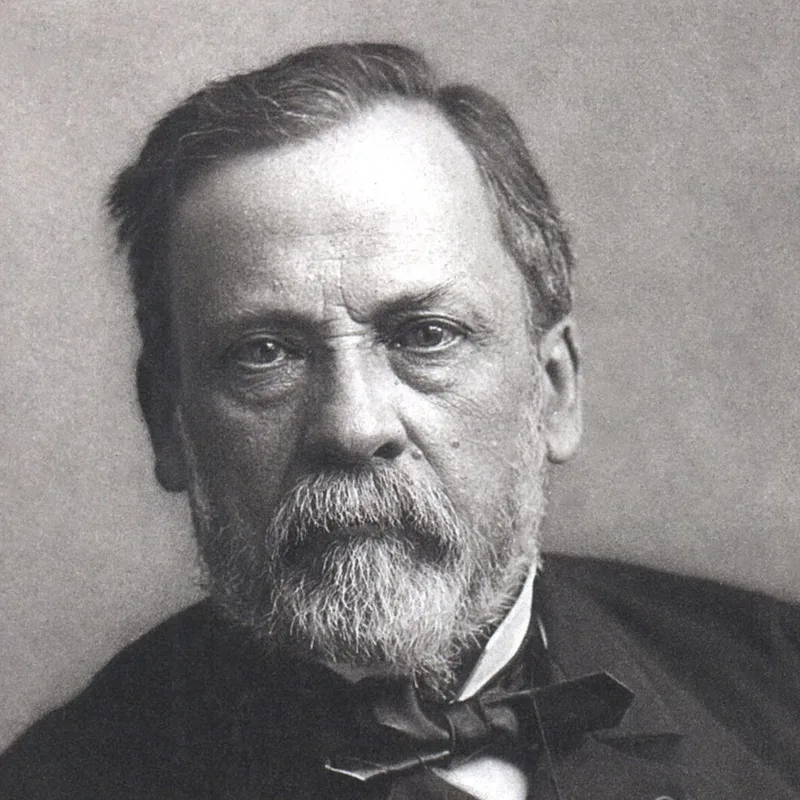
Louis Pasteur
Chemist, Microbiologist, 1822–1895
Catholic, awed by the Infinite
What is the meaning of life?
Serve humanity's progress, then say: I have done what I could.
Pasteur showed that fermentation and many diseases are caused by microorganisms, disproved spontaneous generation, invented pasteurisation and made the first vaccines against anthrax and rabies; the institute founded in his name in 1888 is still a leader in research on infectious disease. Speaking at the Sorbonne in 1892, at the celebration of his seventieth birthday, he told the students before him how to live: in the serene peace of laboratories and libraries, asking first what they had done for their own instruction, then what they had done for their country, until they could hope to have contributed to the progress and good of humanity. Whatever life granted their efforts, he said, they should be able to say at the end: I have done what I could.
-
“Live in the serene peace of laboratories and libraries. Say to yourselves first: “What have I done for my instruction?” and, as you gradually advance, “What have I done for my country?” until the time comes when you may have the immense happiness of thinking that you have contributed in some way to the progress and to the good of humanity. But, whether our efforts are or not favoured by life, let us be able to say, when we come near the great goal, “I have done what I could.””1
What is the meaning of the universe?
The Infinite forces itself on us; God is its form.
Pasteur was a practising Catholic who kept his faith and his science in separate compartments, insisting that experiment alone must decide scientific questions. In his speech on entering the Académie française in 1882 he turned to what science cannot reach: the human mind, he said, can never stop asking what lies beyond, and whoever admits the existence of the Infinite, as everyone must, affirms something more supernatural than all the miracles of all the religions. The idea of God was for him a form of the idea of the Infinite, and as long as that mystery weighs on human thought, temples will be raised to it.
-
“He who proclaims the existence of the Infinite, and none can avoid it — accumulates in that affirmation more of the supernatural than is to be found in all the miracles of all the religions; for the notion of the Infinite presents that double character that forces itself upon us and yet is incomprehensible. … The idea of God is a form of the idea of the Infinite.”2