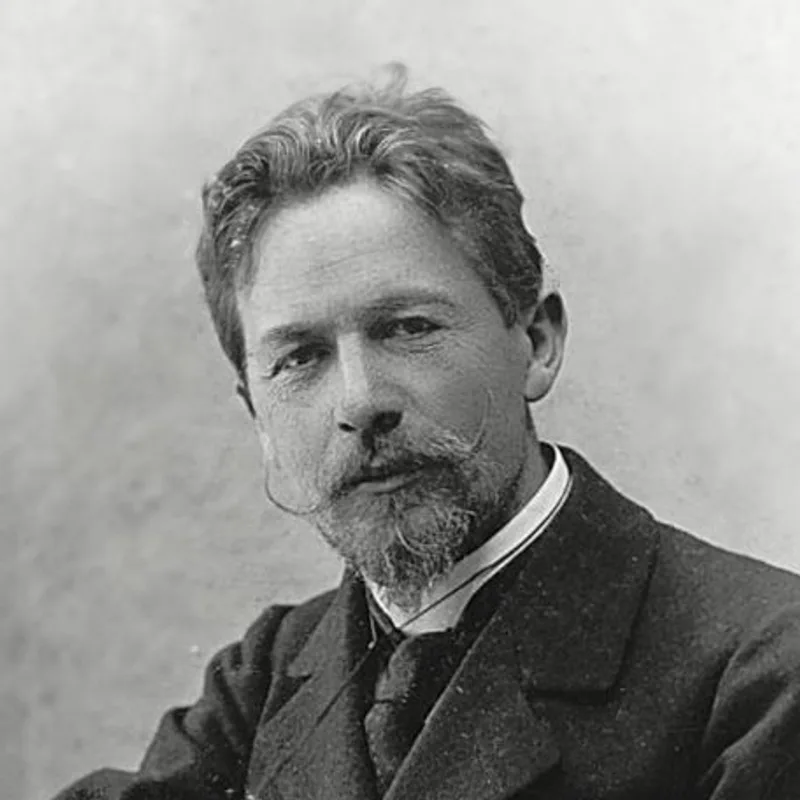
Anton Chekhov
Writer, Playwright, Physician, 1860–1904
Agnostic humanist
What is the meaning of life?
Health, talent, love, and absolute freedom from violence and lies.
Chekhov, the grandson of a serf, paid for his medical studies in Moscow by writing comic stories and went on to practise medicine for much of his life, treating peasants for free during a cholera epidemic. He refused to be claimed by any camp, liberal or conservative, and distrusted labels of every kind. In a letter of 1888 he named what he held sacred: the human body, health, intelligence, talent, inspiration, love and absolute freedom. In his notebook he wrote that the wish to serve the common good must be a need of the soul, not a theory.
-
“My holy of holies is the human body, health, intelligence, talent, inspiration, love, and the most absolute freedom—freedom from violence and lying, whatever forms they may take.”1
-
“The desire to serve the common good must without fail be a requisite of the soul, a necessity for personal happiness; if it issues not from there, but from theoretical or other considerations, it is not at all the same thing.”2
What is the meaning of the universe?
The wise cross the vast field between God and no God.
Chekhov grew up in a strict religious household, sang in his father's church choir, and later said he had long ago lost his faith. Yet he never mocked belief, and he distrusted easy certainty in either direction. In his diary in 1897 he wrote that between “there is a God” and “there is no God” lies a whole vast tract, which the truly wise cross with great effort, while most people know only one extreme. Faith, in another note, is the thirst that thinks it could drink an ocean; science is the two glasses one actually drinks.
-
“Between “there is a God” and “there is no God” lies a whole vast tract, which the really wise man crosses with great effort. A Russian knows one or other of these two extremes, and the middle tract between them does not interest him; and therefore he usually knows nothing, or very little.”3
-
“When one longs for a drink, it seems as though one could drink a whole ocean—that is faith; but when one begins to drink, one can only drink altogether two glasses—that is science.”2