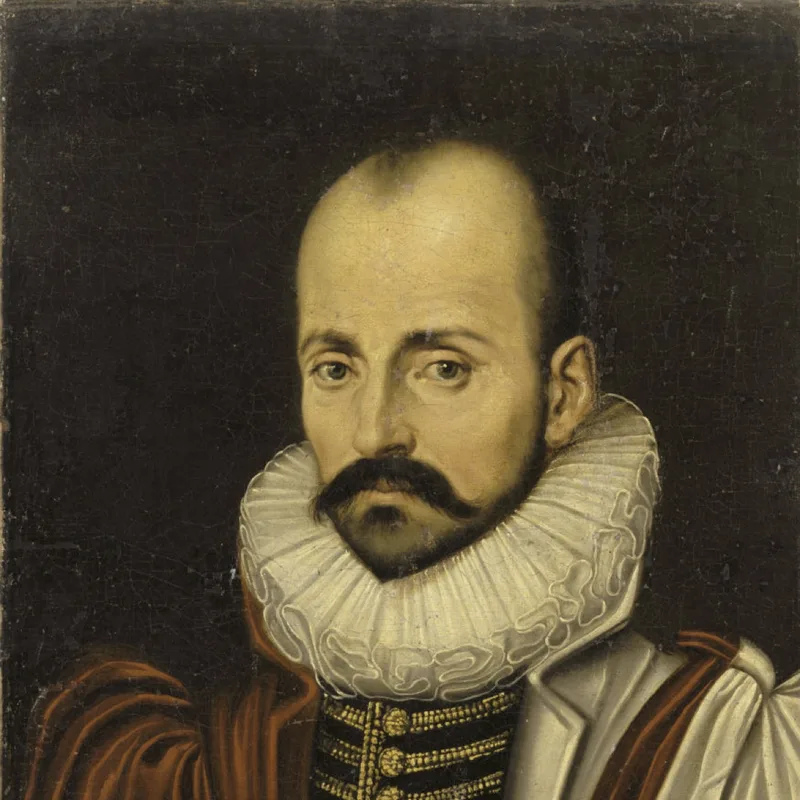
Michel de Montaigne
Essayist, Philosopher, 1533–1592
Catholic skeptic
What is the meaning of life?
To live well and to purpose: that is the great work.
Montaigne, a magistrate from near Bordeaux, retired to the tower library of his château at 38 and spent the rest of his life writing the Essays, the first book to take its author's own ordinary life as its subject. His early essays follow the ancients in treating philosophy as a preparation for death. By the last one, Of Experience, he had arrived at something plainer: to live well, here and in the body, is the great work, and reigning, building and getting rich are only props to it. He called living his trade and his art.
What is the meaning of the universe?
What do I know? Reason cannot reach God; only faith can.
Montaigne lived through the French Wars of Religion and remained a Catholic, but his longest essay, the Apology for Raymond Sebond, is a sustained attack on human reason's claim to know God or the order of things. Humans, he argued, make gods in their own image and are no better placed to understand the universe than any other animal. Even religion most people receive by birth and custom, as they receive their country. His motto, What do I know?, engraved on a medal with a pair of scales, sums up the doubt; what remains is faith, which he held to be a gift of God rather than a conclusion of reason.