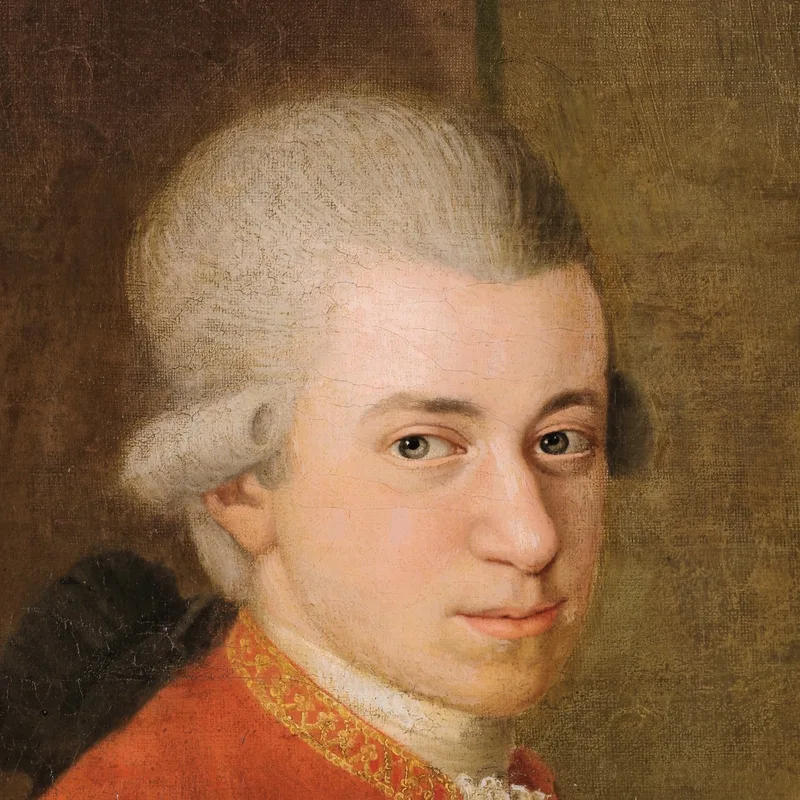
Wolfgang Amadeus Mozart
Composer, Pianist, 1756–1791
Catholic, Freemason
What is the meaning of life?
To compose, stay cheerful, and make a friend of death.
Mozart left no philosophy; his answer is in his letters to his father. At twenty-one, on the job-hunting journey of 1777, he called composing his chief delight and passion. His fullest statement came on 4 April 1787, after he heard that his father was seriously ill; Leopold died on 28 May. Death, closely considered, was the true goal of our existence, and he had spent the last few years making friends with it, so that its image now consoled rather than frightened him. He added that he never went to bed without thinking he might not see the next day, yet no one who knew him could call him morose, and he thanked his Creator daily for that cheerfulness.
-
“I am far happier when I have something to compose, which is my chief delight and passion”1
-
“As death, when we come to consider it closely, is the true goal of our existence, I have formed during the last few years such close relationships with this best and truest friend of mankind that death's image is not only no longer terrifying to me, but is indeed very soothing and consoling”2
-
“I never lie down at night without reflecting that — young as I am — I may not live to see another day. Yet no one of all my acquaintances could say that in company I am morose or disgruntled.”2
What is the meaning of the universe?
A merciful God; death is the key to our true happiness.
Mozart was raised a Catholic by parents who insisted on strict observance, and he remained a practising Catholic all his life. His letters describe an almighty God to be feared, but also loving and merciful, who never forsakes his servants, and whose will he accepted as his own. When his mother died in Paris in July 1778, during their journey together, his consolations were submission to that will and the belief that the family would see her again and live more happily than in this world. In December 1784 he became a Freemason, and saw no conflict between lodge and Church. His 1787 letter on death, which the Mozarteum describes as influenced by the spirit of Freemasonry, calls death the key to our true happiness.
-
“Do not be uneasy on my account, for I have always God before my eyes, I acknowledge His omnipotence, I dread His wrath; but I also know His love, His compassion and mercy towards His creatures, and that He will never forsake His servants. When His will is done I am resigned; so I never can fail to be happy and contented.”3
-
“…my third source of consolation—namely, that she is not lost to us forever, that we shall see her again, and live together far more happily and blessedly than in this world. The time as yet we know not, but that does not disturb me; when God wills it I am ready.”4
-
“I thank my God for graciously granting me the opportunity … of learning that death is the key which unlocks the door to our true happiness.”2