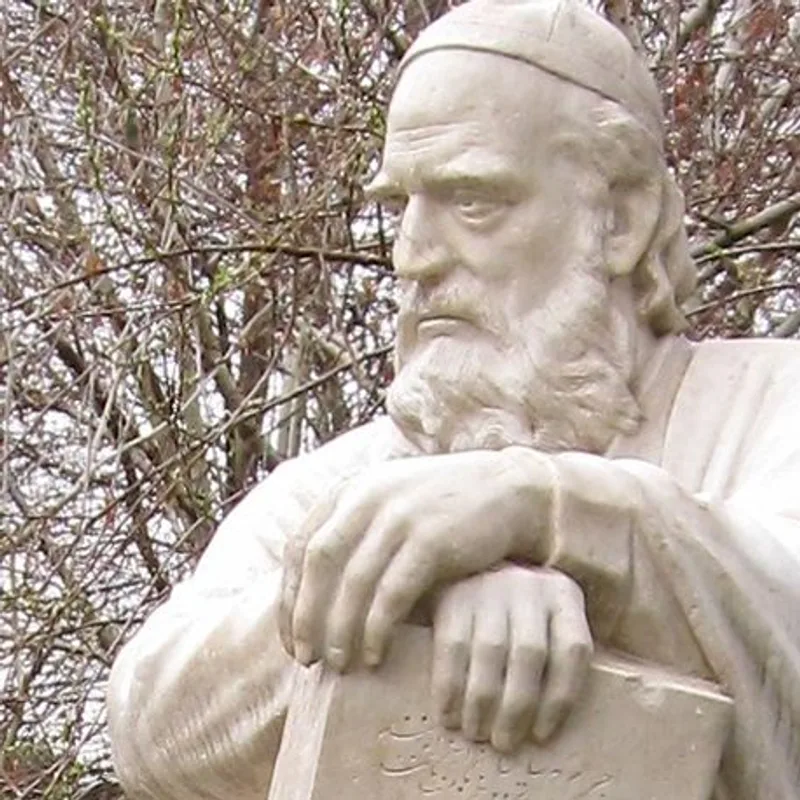
Omar Khayyam
Poet, Mathematician, Astronomer, 1048–1131
Skeptic
What is the meaning of life?
Make the most of today, before we too turn to dust.
Omar Khayyam was a Persian mathematician and astronomer who wrote on cubic equations and helped reform the calendar for the Seljuk sultan Malik-Shah. The quatrains (rubaiyat) that made him famous were gathered after his death, and how many are really his is uncertain. In Edward FitzGerald's free English version, first published in 1859 and a bestseller by the end of the century, their advice is plain. Life is brief, the past cannot be changed and the future is unknown, so take the wine and the hour while they last.
-
“Ah, make the most of what we yet may spend, / Before we too into the Dust descend; / Dust into Dust, and under Dust to lie, / Sans Wine, sans Song, sans Singer, and—sans End!”1
-
“The Moving Finger writes; and, having writ, / Moves on: nor all your Piety nor Wit / Shall lure it back to cancel half a Line, / Nor all your Tears wash out a Word of it.”2
What is the meaning of the universe?
We come not knowing why, and leave not knowing where.
The quatrains ask where we come from and where we go, and get no answer from scholars, saints or the sky itself. Behind the world there is a door with no key and a veil that cannot be seen through. Some readers take the wine and the tavern as Sufi symbols of divine love; others read the poems as plain scepticism. The historical Khayyam also wrote treatises on metaphysics in the tradition of Avicenna, and they do not settle which reading is right.
-
“Into this Universe, and Why not knowing / Nor Whence, like Water willy-nilly flowing; / And out of it, as Wind along the Waste, / I know not Whither, willy-nilly blowing.”3
-
“There was the Door to which I found no Key; / There was the Veil through which I might not see: / Some little talk awhile of ME and THEE / There was—and then no more of THEE and ME.”4