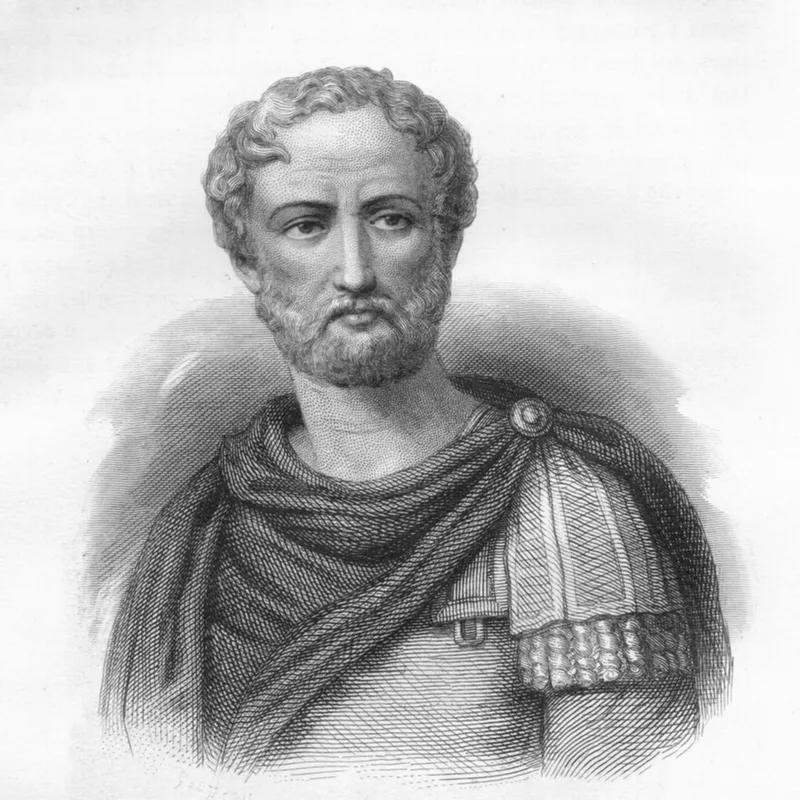
Pliny the Elder
Naturalist, Author, c. 23 – 79
Nature is divine
What is the meaning of life?
To help another human being is to be a god.
Gaius Plinius Secundus was a Roman cavalry officer, provincial administrator and admiral who read and took notes ceaselessly, even in the bath and while travelling. His Natural History (AD 77), in thirty-seven books, gathers what the ancient world knew about the cosmos, the earth, animals, plants, medicine and art, and remained a standard reference for fifteen centuries. Amid the uncertainty of human life, he wrote, the only certain thing is that nothing is certain; what makes a mortal godlike is helping another mortal. He died in AD 79, sailing toward Vesuvius to rescue people and observe the eruption.
What is the meaning of the universe?
The supreme power, whatever it is, pays no heed to human affairs.
Pliny opens the cosmology of the Natural History by declaring the world itself, eternal and immeasurable, to be divine, and the sun to be its ruling spirit. He mocked the crowd of gods with human shapes, vices and quarrels, and the belief that the highest power busies itself with individual lives: it is ridiculous, he wrote, to suppose that the great head of all things, whatever it may be, pays any regard to human affairs. What he revered was nature, whose powers and workings he spent his life cataloguing.
-
“But it is ridiculous to suppose, that the great head of all things, whatever it be, pays any regard to human affairs”1