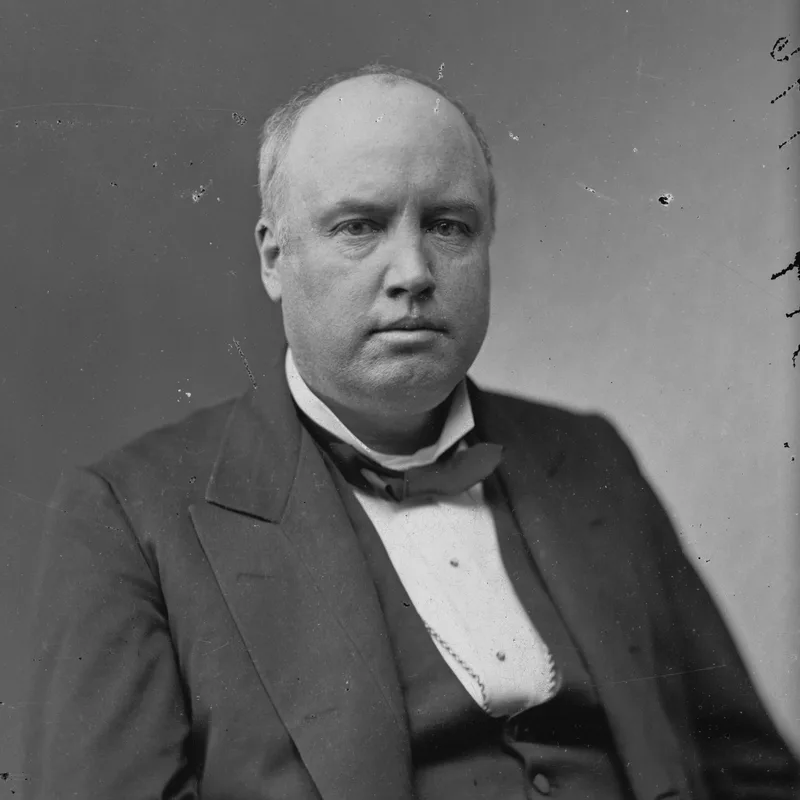
Robert G. Ingersoll
Orator, Lawyer, Writer, 1833–1899
Agnostic freethinker
What is the meaning of life?
Be happy here, take burdens from the weak, build the soul.
Ingersoll, a Union colonel in the Civil War and an Illinois lawyer, became the most popular orator in late nineteenth-century America by lecturing against religion, and was known as “the Great Agnostic”. Audiences paid to hear him attack the doctrine of hell and defend reason, science and the rights of women. He thought it strange that joy should be despised in this life and promised as a reward in the next. In his last public address, in 1899, he described real religion as increasing knowledge, helping the weak, defending the right and making a palace for the soul.
-
“And then to rouse yourself to do all useful things, to reach with thought and deed the ideal in your brain, … to increase knowledge, to take burdens from the weak, to develop the brain, to defend the right, to make a palace for the soul. This is real religion. This is real worship.”1
-
“It has always seemed a little curious to me that joy should be held in such contempt here, and yet promised hereafter as an eternal reward. Why not be happy here, as well as in heaven.”2
What is the meaning of the universe?
The agnostic says: I do not know, and neither do you.
Ingersoll grew up the son of a Congregationalist minister and rejected his father's faith, above all the idea that a good God could condemn souls to eternal torment. He called himself an agnostic: he did not claim to know whether an infinite being exists, but he insisted that those who claimed certainty did not know either. He did not deny the possibility of a life after death, only that anyone knew it. If there is a God, he said, he will be merciful to the merciful.