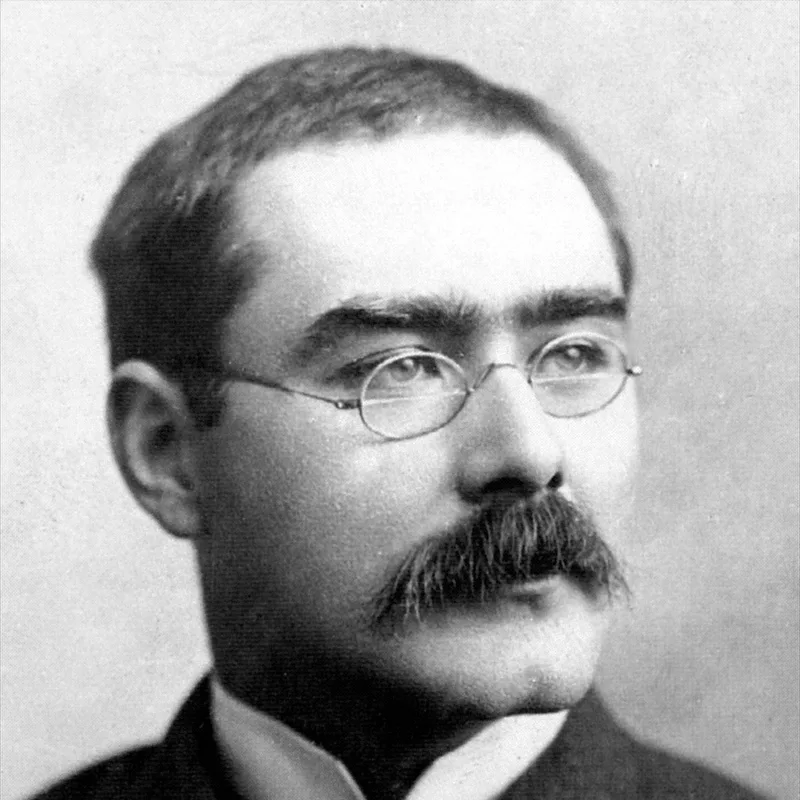
Rudyard Kipling
Writer, Poet, 1865–1936
Stoic duty, humble before God
What is the meaning of life?
Fill every minute, meet triumph and disaster alike, and be a man.
Kipling was born in Bombay, sent to a miserable foster home in England at five, and returned to India at sixteen as a journalist; his stories and verse made him famous by twenty-five, and The Jungle Book and Kim are still read. In 1907 he became the first English-language writer to win the Nobel Prize in Literature. His ideal of life was a stoic code of duty, courage and self-command, summed up in If—, which he wrote as advice to his son; that son was killed in the First World War at eighteen, a loss from which Kipling never recovered.
-
“If you can fill the unforgiving minute / With sixty seconds' worth of distance run, / Yours is the Earth and everything that's in it, / And—which is more—you'll be a Man, my son!”1
What is the meaning of the universe?
Empires pass; only a humble and contrite heart remains before God.
Kipling was no churchgoer, and his religious sense drew on Freemasonry and on the many faiths he knew in India as much as on the Bible. But when Britain celebrated Queen Victoria's Diamond Jubilee in 1897, at the height of its empire, he published Recessional, a prayer warning his nation against pride: captains and kings depart, and all that lasts before God is a humble and contrite heart. Its refrain, Lest we forget, was later carved on war memorials across the Commonwealth.
-
“The tumult and the shouting dies; / The Captains and the Kings depart; / Still stands Thine ancient sacrifice, / An humble and a contrite heart. / Lord God of Hosts, be with us yet, / Lest we forget—lest we forget!”2