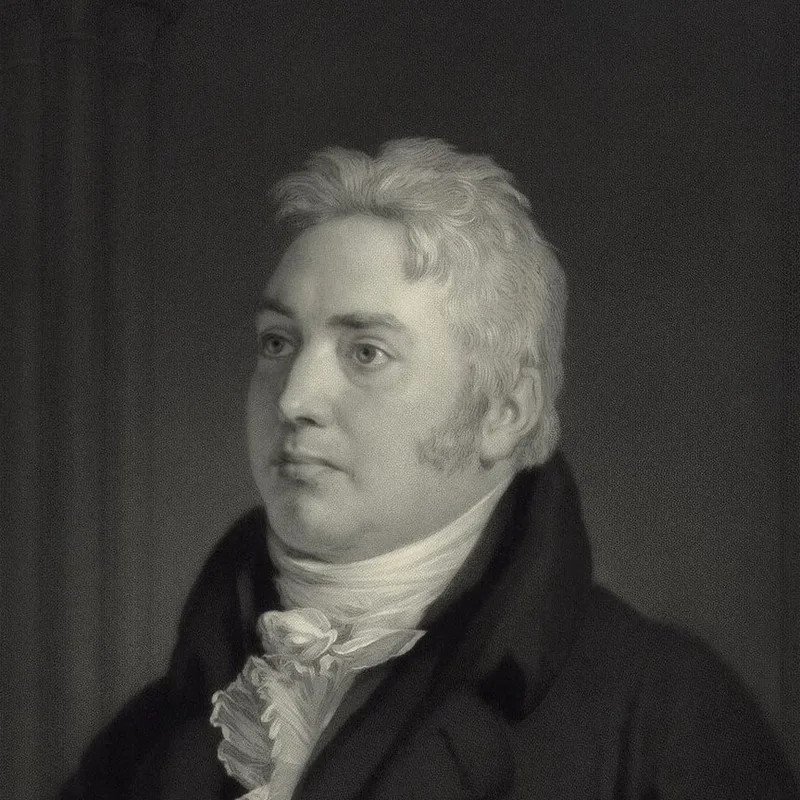
Samuel Taylor Coleridge
Poet, Critic, Philosopher, 1772–1834
From pantheism to Anglicanism
What is the meaning of life?
Be a thinking man; otherwise why be a man at all?
Coleridge wrote The Rime of the Ancient Mariner and, with Wordsworth, the Lyrical Ballads (1798) that launched English Romanticism. Brilliant and unreliable, he struggled for most of his life with opium addiction, and much of his later work took the form of lectures, notebooks and table talk rather than finished books. In Aids to Reflection (1825) he argued that every person should master one art, the art of reflection: if you are not a thinking man, he asked, to what purpose are you a man at all?
-
“If you are not a thinking man, to what purpose are you a man at all?”1
What is the meaning of the universe?
Perhaps all nature is a harp swept by one divine breeze.
As a young Unitarian and admirer of Spinoza, Coleridge flirted with pantheism. In The Eolian Harp (1795), begun during his engagement to Sara Fricker, he wonders whether all animated nature might be organic harps, trembling into thought as one intellectual breeze sweeps over them, at once the soul of each and God of all. In the same poem he lets his wife's gentle reproof call him back from such 'shapings of the unregenerate mind'. In later life he became an orthodox, Trinitarian Anglican and one of the most influential religious thinkers of his century.
-
“And what if all of animated nature / Be but organic harps diversly fram'd, / That tremble into thought, as o'er them sweeps / Plastic and vast, one intellectual breeze, / At once the Soul of each, and God of All?”2