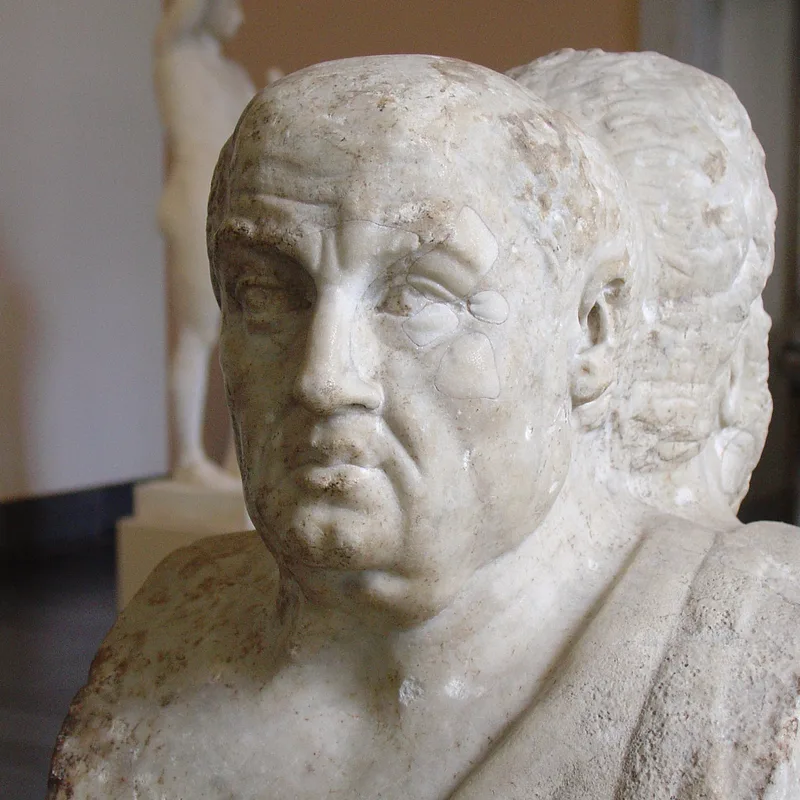
Seneca
Stoic philosopher, Statesman, Playwright, c. 4 BC – AD 65
Stoic
What is the meaning of life?
Not a long life but a well-used one: begin living today.
Seneca was tutor and then adviser to the emperor Nero, one of the richest men in Rome, and a Stoic who wrote about how little a good life needs. In the Moral Letters to Lucilius, written in his last years, he comes back again and again to time: life is not short, we waste it, and what matters is not how long we live but how well. Each day should be lived as a whole life, with death kept in view rather than feared. In AD 65, accused of a part in a conspiracy, he was ordered by Nero to take his own life.
-
“Show me that the good in life does not depend upon life's length, but upon the use we make of it; also, that it is possible, or rather usual, for a man who has lived long to have lived too little.”1
-
“Therefore, my dear Lucilius, begin at once to live, and count each separate day as a separate life.”2
What is the meaning of the universe?
God is the mind of the universe, and lives within us.
As a Stoic, Seneca did not place God outside the world: God is its reason and soul, and he uses the words God, nature and fate for the same ordering power. In Natural Questions, a study of the heavens and the weather written in his last years, he calls knowing God the soul's highest pursuit, and answers the question of what God is with the universe itself, seen and unseen. The same God, he told Lucilius, is not far away in temples but within each of us, as a holy spirit that watches what we do. To accept what happens as the work of the God who guides everything is, for him, both piety and good sense.
-
“But what is God? The universal intelligence. What is God, did I say? All that you see and all that you cannot see.”3
-
“God is near you, he is with you, he is within you. This is what I mean, Lucilius: a holy spirit indwells within us, one who marks our good and bad deeds, and is our guardian.”4
-
“That which you cannot reform, it is best to endure, and to attend uncomplainingly upon the God under whose guidance everything progresses; for it is a bad soldier who grumbles when following his commander.”5