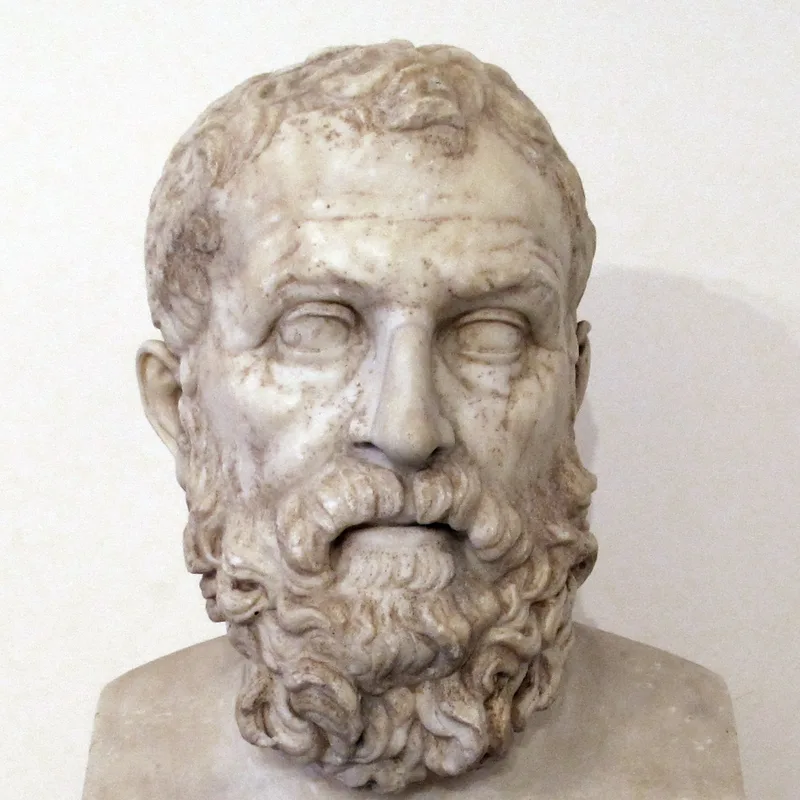
Solon
Statesman, Lawgiver, Poet, c. 630 – c. 560 BC
Nothing in excess
What is the meaning of life?
Call no one happy until they have ended their life well.
Solon was the Athenian statesman who, around 594 BC, cancelled the debts that had reduced poor farmers to slavery and gave Athens a new code of laws; then he left the city for ten years so that the laws would be tested without him. He was counted among the Seven Sages and defended his reforms in poems. Herodotus tells how, on his travels, he visited Croesus, the fabulously rich king of Lydia, who expected to be called the happiest of men. Solon named instead an obscure Athenian who died bravely for his city, and two young brothers who died in their sleep after an act of devotion to their mother, and told the king that no one can be called happy until his life has ended well; until then he is only fortunate. Years later, about to be burned by Cyrus, Croesus remembered the warning.
What is the meaning of the universe?
The divine is jealous of greatness: look to the end of everything.
Behind Solon's warning lies a view of the gods common in archaic Greece: the divine is jealous of human greatness and quick to overturn it, so great prosperity is a danger rather than a guarantee. A human life is long and uncertain, and no day brings the same as another. Wisdom, then, is to keep measure, to avoid excess and pride, and to judge every matter by how it turns out in the end.
-
“Croesus, thou art inquiring about human fortunes of one who well knows that the Deity is altogether envious and apt to disturb our lot.”1
-
“But we must of every thing examine the end and how it will turn out at the last, for to many God shows but a glimpse of happiness and then plucks them up by the roots and overturns them.”1