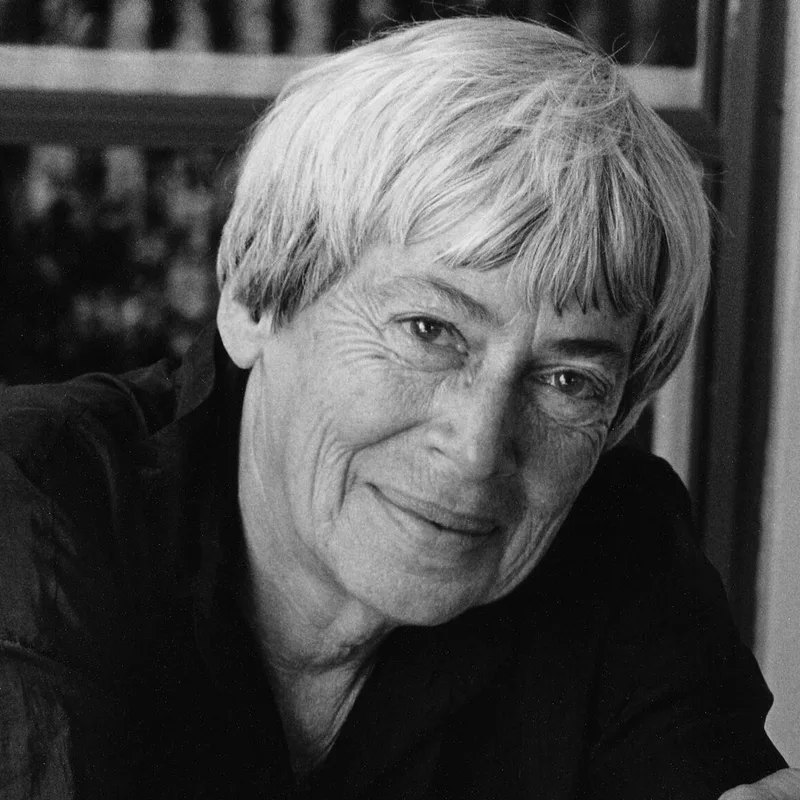
Ursula K. Le Guin
Writer, 1929–2018
Taoist-minded atheist
What is the meaning of life?
We don't live to die; we live in order to live.
Le Guin, the daughter of the anthropologist Alfred Kroeber and the writer Theodora Kroeber, wrote the Earthsea books, The Left Hand of Darkness (1969) and The Dispossessed (1974), science fiction and fantasy that imagined other ways of arranging gender, power and society. Her fiction rarely promises an afterlife; in Earthsea, death is accepted as the price of being alive. Asked in an interview whether people need to believe in heaven to find a reason for living or for following their conscience, she answered that the questioner was simply mistaken: for many people heaven and hell are meaningless, and we don't live in order to die, we live in order to live.
-
“We don't live in order to die, we live in order to live.”1
What is the meaning of the universe?
I talk about the gods; I am an atheist.
Le Guin was raised without religion and called herself an atheist, but she spent her life with the Tao Te Ching, which she first read as a girl and published in her own English version in 1997; its picture of a universe of balance and endless change, in which the way that can be named is not the eternal way, runs through all her work. In her introduction to The Left Hand of Darkness she summed up her position with a writer's irony: she talks about the gods, but she is an atheist; she is also an artist, and therefore a liar. The daughter of an anthropologist, she approached religions as among the greatest of human inventions, and her fiction treats the gods of imagined peoples with an anthropologist's curiosity and respect.
-
“I talk about the gods; I am an atheist.”2