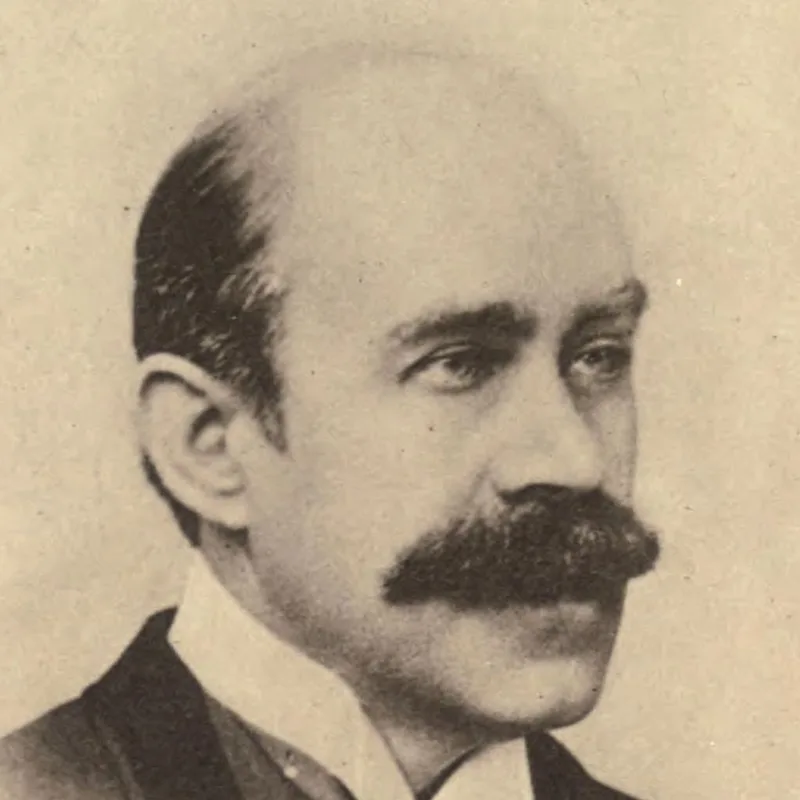
Walter Pater
Critic, Essayist, 1839–1894
Agnostic aesthete
What is the meaning of life?
Burn with a hard, gemlike flame; experience itself is the end.
Pater was a quiet Oxford don, a fellow of Brasenose College, whose Studies in the History of the Renaissance (1873) became the gospel of the aesthetic movement and of young readers like Oscar Wilde. Its notorious Conclusion argues that since life is short and every impression vanishes as soon as it forms, the aim is not the fruit of experience but experience itself: to get as many pulsations as possible into the given time, through passion, art and knowledge. To burn always with this hard, gemlike flame, he wrote, is success in life. The passage caused such a scandal that he dropped it from the second edition, restoring it later with changes.
-
“Not the fruit of experience, but experience itself, is the end. A counted number of pulses only is given to us of a variegated, dramatic life. … To burn always with this hard, gemlike flame, to maintain this ecstasy, is success in life.”1
-
“…we have an interval, and then our place knows us no more. Some spend this interval in listlessness, some in high passions, the wisest, at least among “the children of this world,” in art and song. For our one chance lies in expanding that interval, in getting as many pulsations as possible into the given time.”1
What is the meaning of the universe?
All melts under our feet: a perpetual weaving and unweaving.
Pater lost his religious faith as an undergraduate, though he kept a lifelong love of the Church's liturgy and in later years went to services again. The Conclusion to The Renaissance describes the world that modern science reveals: our bodies a perpetual motion of elements also found in the remotest places, our minds a stream of impressions that vanish as soon as they form. What is real in our life comes down to a fleeting moment, a continual vanishing away, a strange perpetual weaving and unweaving of ourselves; and we are all, as Victor Hugo said, under sentence of death with an indefinite reprieve.
-
“To regard all things and principles of things as inconstant modes or fashions has more and more become the tendency of modern thought.”1
-
“It is with this movement, with the passage and dissolution of impressions, images, sensations, that analysis leaves off—that continual vanishing away, that strange, perpetual weaving and unweaving of ourselves.”1