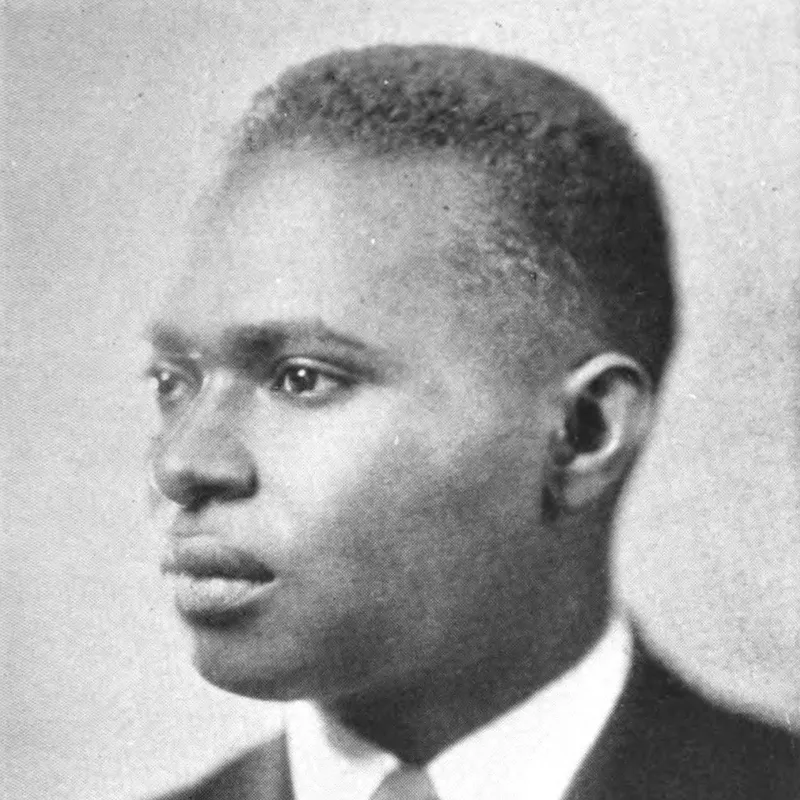
Countee Cullen
Poet, 1903–1946
Questioning believer
What is the meaning of life?
Marvel that a Black poet is made, and bidden to sing.
Cullen was raised in Harlem by a Methodist minister who adopted him as a teenager, studied at New York University and Harvard, and published his first book, Color, at twenty-two, becoming one of the brightest voices of the Harlem Renaissance; he later taught French to schoolchildren, among them the young James Baldwin. His sonnet Yet Do I Marvel lists the mysteries of a world made by a good God and ends with the one that touches him most: that God should make a poet Black, in a country that would not hear him, and still bid him sing. He died in New York in 1946, at forty-two.
-
“Yet do I marvel at this curious thing: / To make a poet black, and bid him sing!”1
What is the meaning of the universe?
God is good, though his ways are too inscrutable for us.
Cullen grew up in the church and kept his faith, but his poems wrestle with it. Yet Do I Marvel begins by affirming that God is good and kind, then asks why the mole is born blind and why flesh made in God's image must die, and concludes that God's ways are inscrutable to a mind too distracted by small cares to understand what drives his awful hand. In another poem, Heritage, he confesses that he sometimes fashions dark gods of his own.
-
“I doubt not God is good, well-meaning, kind, / And did He stoop to quibble could tell why / The little buried mole continues blind, / Why flesh that mirrors Him must some day die”1
-
“Inscrutable His ways are, and immune / To catechism by a mind too strewn / With petty cares to slightly understand / What awful brain compels His awful hand.”1