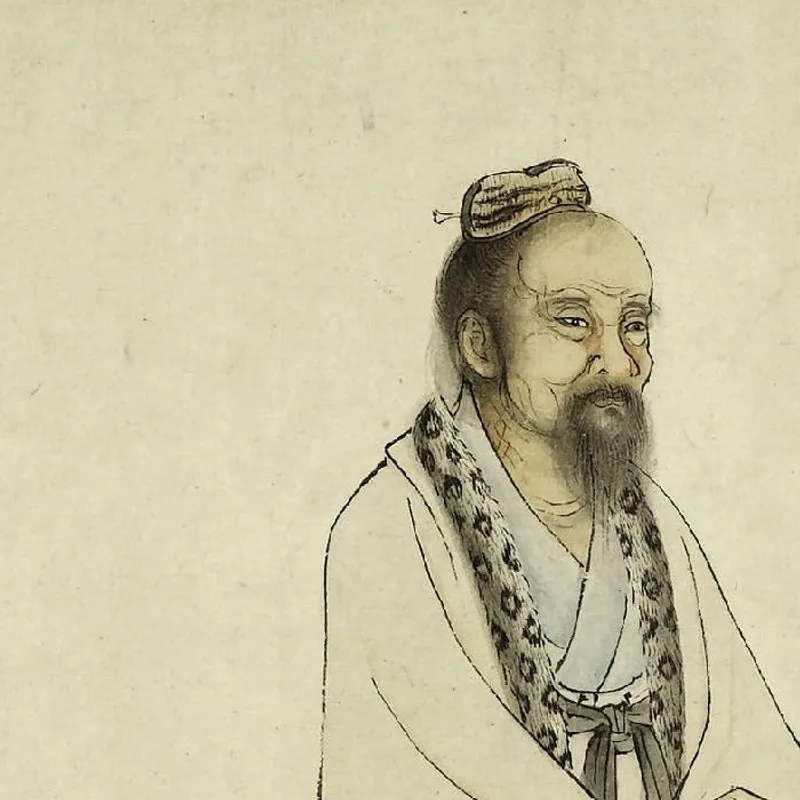
Zhuangzi
Philosopher, c. 369 – c. 286 BC
Taoist
What is the meaning of life?
Move with the Tao's changes: toil, old age and death alike.
Zhuangzi was a Chinese thinker of the Warring States period; the book that bears his name, partly his own and partly by later followers, is with the Tao Te Ching one of the two founding texts of Taoism. Where the Confucians taught duty and ritual, he taught free and easy wandering: letting go of fixed ideas of useful and useless, success and failure, and moving with the changes of the Tao. Life and death are phases of one transformation, like the seasons. When his wife died, a friend found him drumming on a bowl and singing, and he explained why he had stopped weeping.
-
“TAO gives me this form, this toil in manhood, this repose in old age, this rest in death. And surely that which is such a kind arbiter of my life is the best arbiter of my death.”1
-
“And now, by virtue of a further change, she is dead, passing from one phase to another like the sequence of spring, summer, autumn, and winter. And while she is thus lying asleep in Eternity, for me to go about weeping and wailing would be to proclaim myself ignorant of these natural laws.”2
What is the meaning of the universe?
All things and I are one, and the self a passing dream.
For Zhuangzi the Tao is the nameless source and pattern of everything, present even in the lowliest things. The distinctions people argue over, this and that, big and small, right and wrong, depend on where one stands; seen from the Tao, the universe and the self came into being together and are one. His best-known story makes the same point about the self: dreaming he was a butterfly, he woke unsure which of the two was dreaming. He called this the transformation of things.
-
“The universe and I came into being together; and I, and everything therein, are ONE.”3
-
“Once upon a time, I, Chuang Tzŭ, dreamt I was a butterfly, fluttering hither and thither, to all intents and purposes a butterfly. … Suddenly, I awaked, and there I lay, myself again. Now I do not know whether I was then a man dreaming I was a butterfly, or whether I am now a butterfly dreaming I am a man.”3