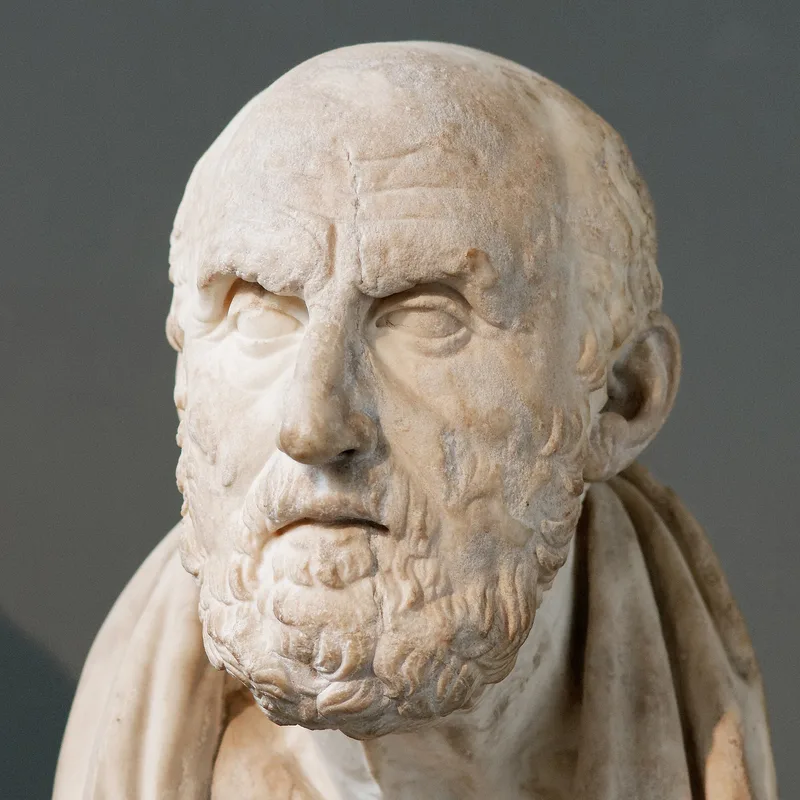
Chrysippus
Philosopher, c. 279 – c. 206 BC
Stoic: the world is God
What is the meaning of life?
Live in agreement with nature, as part of the whole.
Chrysippus came from Soli in Cilicia, was a long-distance runner before he turned to philosophy, and succeeded Cleanthes as head of the Stoic school. He wrote more than seven hundred works and built Stoicism into a complete system, so that people said that without Chrysippus there would have been no Stoa. For him the goal of life is to live in agreement with nature, which is the same as living virtuously, because each person's nature is a part of the nature of the whole universe. He had no patience with the crowd: if he had followed the multitude, he said, he would never have studied philosophy. One story says he died laughing at the sight of a donkey eating his figs.
-
“Again, living virtuously is equivalent to living in accordance with experience of the actual course of nature, as Chrysippus says in the first book of his De finibus; for our individual natures are parts of the nature of the whole universe.”1
-
“Once when somebody reproached him for not going with the multitude to hear Ariston, he rejoined, “If I had followed the multitude, I should not have studied philosophy.””2
What is the meaning of the universe?
The world is God, ordered by reason and by fate.
Chrysippus taught that the universe is a single living, rational being, pervaded by a divine breath, and that this world-soul is God. Divine reason works through fate, the unbroken chain of causes, which he tried hard to reconcile with human responsibility. Everything in the world, he argued, exists for the sake of something else, plants for animals and animals for people, except the universe itself, which is complete and exists for its own sake.
-
“For he says that the divine power is placed in reason, and in the spirit and mind of universal nature; that the world, with a universal effusion of its spirit, is God…”3
-
“For Chrysippus says, very acutely, that as the case is made for the buckler, and the scabbard for the sword, so all things, except the universe, were made for the sake of something else.”4