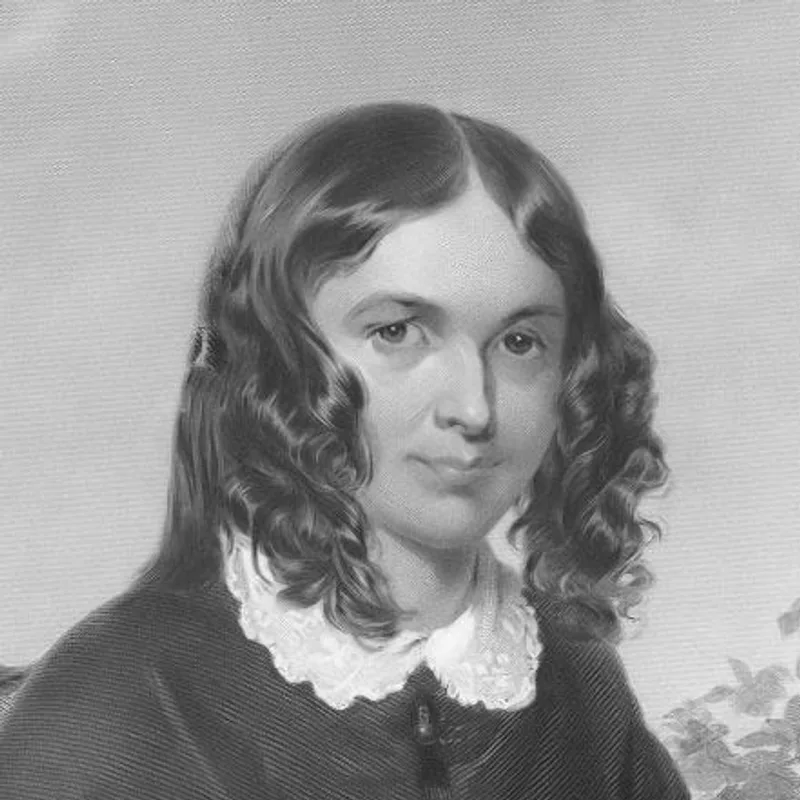
Elizabeth Barrett Browning
Poet, 1806–1861
Christian, God in all things
What is the meaning of life?
Love with the breath, smiles and tears of all your life.
Elizabeth Barrett was the most celebrated woman poet in Victorian England, a semi-invalid who for years barely left her room in her tyrannical father's house in London, until the younger poet Robert Browning wrote to her in admiration in 1845. They married in secret the next year and fled to Italy, where she regained much of her health, had a son, and threw herself into the cause of Italian unification. The Sonnets from the Portuguese, written during the courtship and given to Robert after their marriage, end in a declaration of love that has outlived almost everything else from her century: love with the breath, smiles and tears of a whole life, and, if God chooses, better still after death.
-
“I love thee with the breath, / Smiles, tears, of all my life!—and, if God choose, / I shall but love thee better after death.”1
What is the meaning of the universe?
Earth is crammed with heaven, and every common bush afire with God.
Barrett Browning's Christianity was devout but broad, and she read Swedenborg and was fascinated by spiritualism. In her verse-novel Aurora Leigh (1856), the story of a woman poet's struggle for her vocation, the heroine argues that nothing in the world is small: a bee's hum is coupled with the spinning stars, every pebble proves a sphere, and earth is crammed with heaven. Only those who see take off their shoes, like Moses before the burning bush; the rest sit round it and pick blackberries.
-
“Earth's crammed with heaven, / And every common bush afire with God: / But only he who sees, takes off his shoes, / The rest sit round it, and pluck blackberries…”2